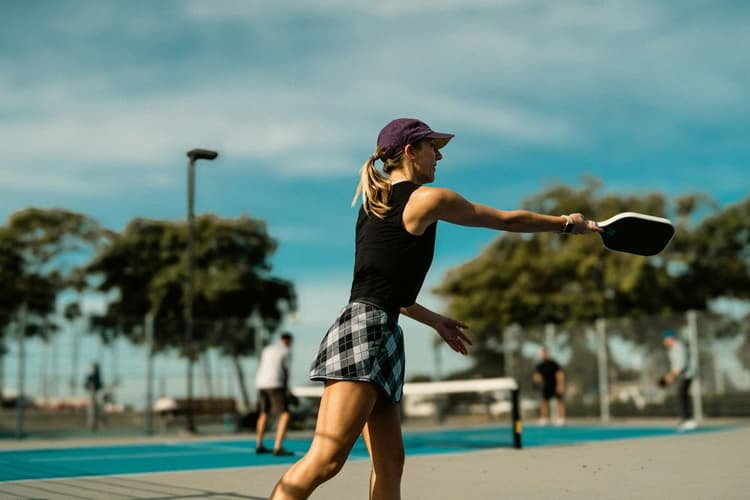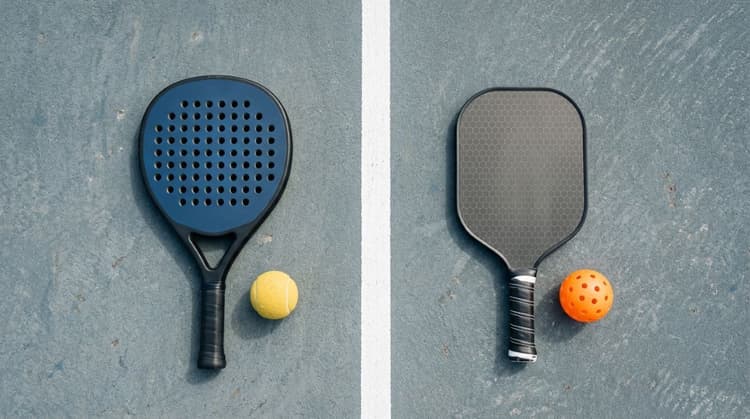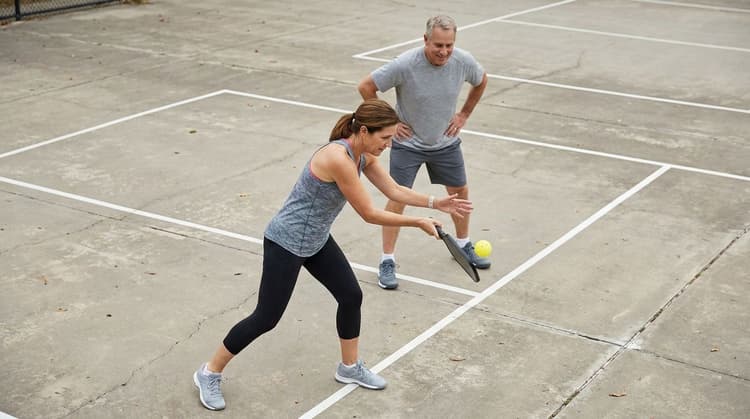
Most players are surprised by how sore they are after their first few sessions. That soreness is not random. Pickleball loads the body in a specific pattern: quick pushes off the ground, long low holds at the kitchen line, and repeated twisting through the hips and torso.
Once you understand which muscles are doing that work, you can warm up better, train smarter, and avoid the sore spots that keep players off court for weeks.
The short answer: Pickleball works your quadriceps, hamstrings, glutes, calves, and hip muscles in the lower body; your obliques, deep core, and lower back in the core; and your shoulders, rotator cuff, upper arms, and forearms in the upper body. Every shot uses several of these at once. The sections below break down which muscles work and when.
Lower body: the engine of every court movement
Your legs drive every movement on the court. They absorb impact, create the first push toward the ball, and help you stay balanced for the next shot. The demand is higher than most players expect, especially during kitchen-line exchanges.
A 2024 study on recreational pickleball players found that falls often happened during lunges and backward movement. That is exactly why lower-body strength, quick direction changes, and balance matter so much in this sport.
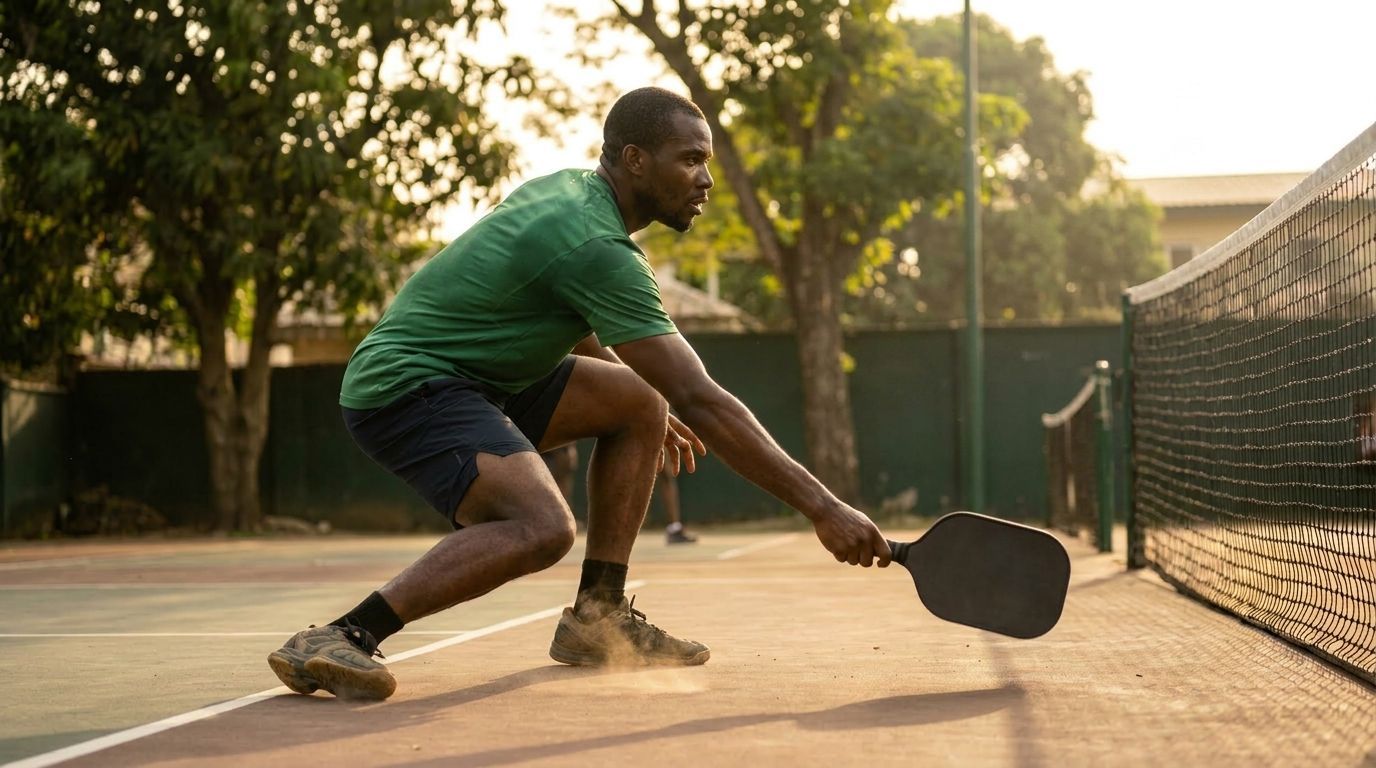
Quadriceps are the front-thigh muscles that help you hold an athletic stance, absorb a split-step, and push toward the ball. The hard part is not one explosive move. It is holding a low stance for 10 to 30 seconds during a long doubles rally. That is why your legs can feel heavy after a session that did not feel especially intense.
Hamstrings are the back-thigh muscles that help you slow down, bend your knees, and stop under control. They do their hardest work when you are braking after a sprint, reaching for a low dink, or changing direction.
Your glutes are your main push-off muscles. The big glute muscle helps you explode forward. The smaller side-glute muscles help you shuffle, lunge, and stay stable when you move wide. Weak side glutes can show up as wobbly hips, poor balance on wide balls, or knee discomfort over time.
Calves keep you light on your feet. They help with quick pivots, small adjustment steps, and staying ready at the kitchen line. First-session calf soreness is common because pickleball asks for constant small movements, not just straight-line running.
Your inner and outer hip muscles help you reach wide balls, shuffle side to side, and stay balanced when your weight shifts onto one leg. They rarely get direct training, but they fatigue fast in longer sessions.
Core: the transfer chain between your legs and your paddle
Your core is more than your abs. It includes the muscles around your spine, stomach, lower back, and hips. In pickleball, the core keeps your body steady and helps move power from your legs into your paddle arm.
Sports medicine research on the kinetic chain explains the idea clearly: power does not come from the arm alone. The legs, hips, trunk, shoulder, and arm work together, and the core helps pass force from the lower body to the paddle.
Obliques are the side-ab muscles that help you rotate. They work on forehands, backhands, drives, and cross-court shots. When you turn through the ball instead of just arming it, your obliques are part of the reason the shot feels stronger.
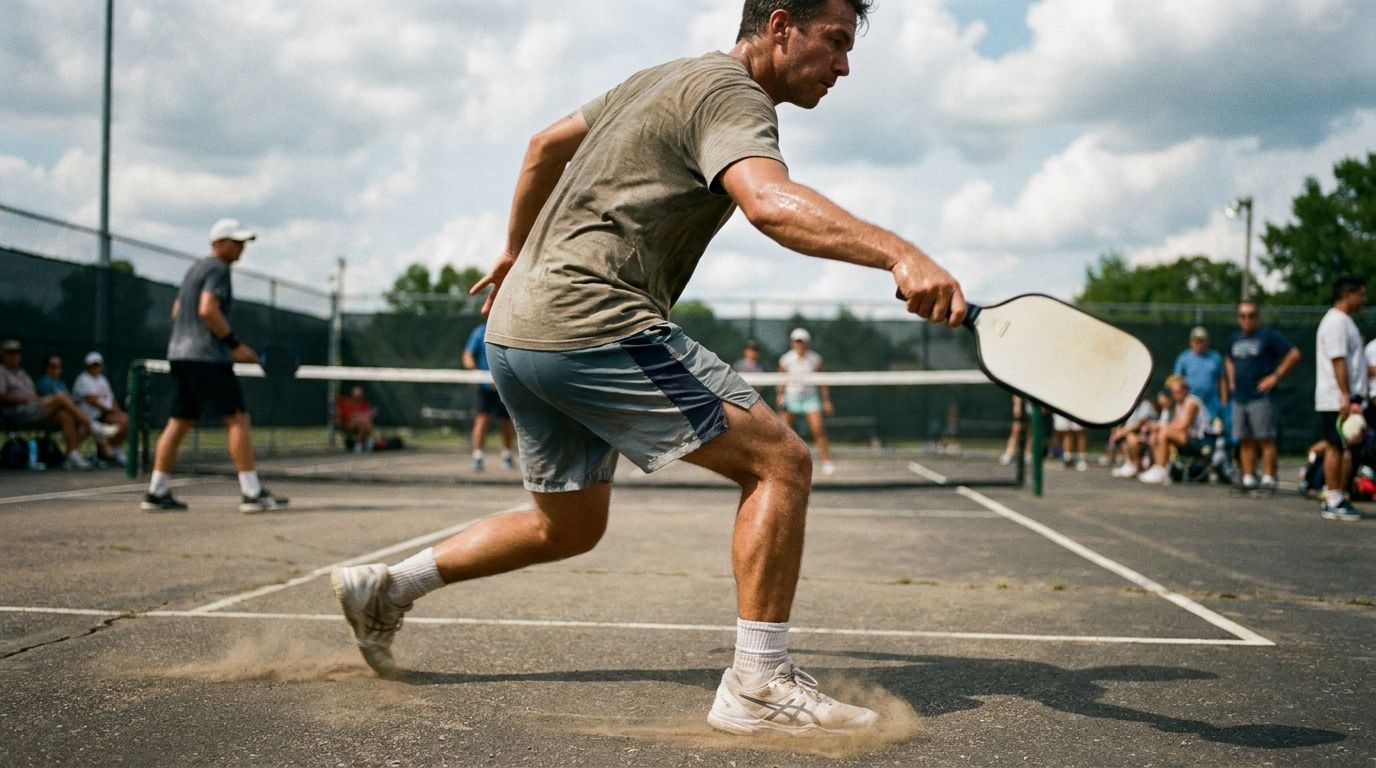
Your transverse abdominis is your deep core muscle. Think of it as the muscle that keeps your trunk steady while your legs move and your paddle arm swings. When it is weak, the shoulder and elbow often do extra work to make up for the missing stability.
Your rectus abdominis is the front ab muscle. It helps you bend forward from your torso when you reach for short balls near the kitchen.
Your lower back stabilizing muscles help keep your spine steady while you rotate, reach, and recover after each shot. Lower back fatigue is common when these muscles are asked to support hundreds of small turns in one session.
Upper body: where power is delivered and shots are controlled
The upper body is the last link in the chain. It delivers what the legs and core created. For a broader look at the damage that shows up in clinics, the data in common pickleball injuries explains the bigger injury picture.
Deltoids are your shoulder muscles. They raise the arm for serves and overheads, help stabilize the shoulder during volleys, and slow the arm down after swings. That is why shoulder fatigue often shows up after high-volume overhead sessions.
The rotator cuff is a group of 4 small shoulder muscles that keeps the ball of the shoulder joint steady while your arm moves. It works hardest on overheads, especially when the arm is raised and loaded.
Research on upper-extremity injury in recreational pickleball players supports the link between playing behavior, stretching habits, grip tightness, and arm injury risk.
Biceps and triceps help bend and straighten the elbow. Triceps are especially active on quick drive volleys, where the arm extends fast through contact.
Your forearm muscles control your grip, wrist angle, paddle face, and touch shots. The inside forearm muscles help you hold the paddle. The outside forearm muscles work especially hard on backhands.
When those outside forearm muscles get overloaded, pain can show up on the outside of the elbow. Players usually call that pickleball elbow.
When choosing a paddle, weight and grip circumference directly affect how hard these muscles have to work. A paddle that is too heavy or a grip that is too wide increases forearm load with every swing. How to choose a pickleball paddle covers the specs worth checking before your forearm tells you.
Shot-by-shot: which muscles fire and when
Knowing that pickleball uses the shoulder is less useful than knowing which shot stresses it most. The table below maps each movement to the muscles doing the most work.
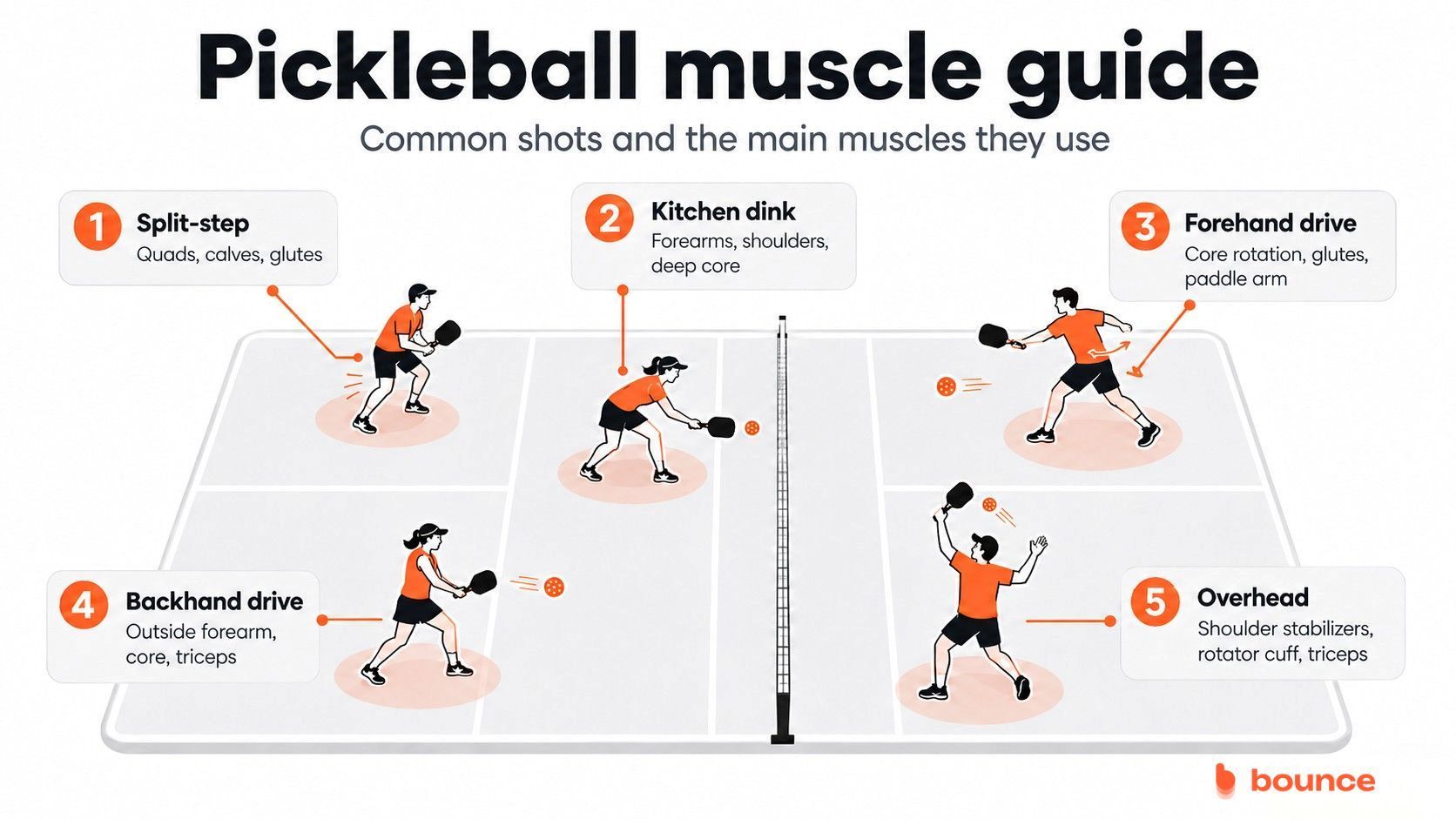
| Shot | Primary muscles | Key demand |
| Split-step | Quads, calves, glutes | Quick preload, soft landing, ready position |
| Lateral shuffle | Side glutes, outer hips, calves | Side-to-side movement and stopping under control |
| Kitchen dink | Forearms, shoulders, deep core | Paddle-face control while holding a low stance |
| Forehand drive | Side abs, glutes, shoulders, forearms | Power moving from the ground through the body |
| Backhand drive | Side abs, outside forearm, triceps | Heavy forearm control, especially on the run |
| Overhead | Shoulders, rotator cuff, triceps, glutes | Highest shoulder demand and most fatigue risk |
| Low volley | Quads, hamstrings, core | Low hold with quick arm extension |
The dink looks easy. The muscles doing the quiet work are your outside forearm muscles, which control the paddle face, your shoulders, which keep the arm in position, and your deep core, which keeps your trunk steady while your legs stay low. Long dink exchanges are why forearm fatigue shows up late in sessions.
The backhand drive often carries the highest outside-forearm load. Players who hit heavy backhand drives from the transition zone, especially while moving, are loading the same area that often becomes pickleball elbow. Training those outside forearm muscles before pain starts is one of the better off-court investments a player can make.
The overhead is where the shoulder takes its heaviest load. As the arm rises and extends, the rotator cuff keeps the shoulder steady. When it gets tired, the bigger shoulder muscles start compensating and mechanics get messy. That is where problems usually begin.
If your soreness keeps showing up after the same shot, that is usually a technique signal. A coach can often see whether the problem is coming from footwork, paddle grip, swing path, or a missing warm-up step long before it becomes an injury.
What this means for how you play and train
Understanding which muscles pickleball loads is useful. Acting on it is what changes how you feel after you play.
The 4 muscles most worth warming up before play
Most pre-play routines are too general. These are the areas most underprepared for what actually happens on court:
- Glute medius: lateral band walk or clamshell, 2 sets of 15 reps per side
- Hip flexors: 90-second lunge hold per side
- Rotator cuff external rotators: band external rotation, 2 sets of 15 reps per side
- Forearm extensors: wrist extension stretch plus light resistance, 60 seconds per side
Two minutes on each of these before you step on the court reduces the load on the structures most likely to be underprepared. Cleveland Clinic notes that pickleball combines aerobic exercise and balance, along with interval-style bursts and flexibility demands, which is exactly why a generic warm-up misses the mark.
The gaps pickleball does not fill
Pickleball builds muscular endurance in the muscles it uses repeatedly. It is weaker at building true strength, because strength training usually requires gradually adding more resistance over time.
The muscles most undertrained relative to their court demand are usually:
- Glute medius: the side-glute muscle that supports shuffles, lunges, and balance
- Transverse abdominis: the deep core muscle that keeps the trunk steady
- Forearm extensors: the outside forearm muscles tied to pickleball elbow
- Rotator cuff external rotators: small shoulder stabilizers that protect the joint on overheads
Conclusion
Pickleball’s muscle demand is real, specific, and uneven. The kitchen stance loads the quads and glutes. The backhand drive asks a lot from the outside forearm. The overhead stresses the shoulder. The core ties the chain together quietly in the background.
Knowing which muscles work will not fix your game by itself. But it makes the soreness easier to understand, the warm-up easier to choose, and the off-court training easier to prioritize.
For players building their game through structured coaching and organized play, Bounce connects you with certified coaches and competitive formats in your city.
Frequently asked questions
Does pickleball build muscle?
Yes, but mostly muscular endurance and functional strength rather than visible muscle size. The repeated pushes, stops, low holds, and swings build work capacity in the legs, core, shoulders, and forearms. If building muscle mass is the goal, pair pickleball with resistance training.
Is pickleball a good full-body workout?
Yes. Pickleball uses the lower body, core, and upper body together instead of isolating one muscle at a time. If you want the calorie and cardio breakdown, calories burned playing pickleball is worth reading alongside this.
Is pickleball good for your core?
Yes. Your core works constantly as a stabilizer and power-transfer system. The side abs are especially active on full swings, while the deep core helps keep your trunk steady during quick steps and reaches.
What muscle does pickleball work the most?
The quadriceps and glutes carry the heaviest sustained load, especially during kitchen exchanges. The shoulder and rotator cuff take the highest peak load on overhead shots.
Can pickleball cause muscle soreness?
Yes, especially after early sessions or when you add new movement patterns to your game. The most common sore spots are the quads, calves, outside forearm, and shoulder. Warm up the muscles you actually use on court, then build strength around the areas that keep getting sore.
Does pickleball count as strength training?
No. Pickleball builds endurance, coordination, balance, and cardio fitness. ACE-sponsored pickleball research found that regular play can meet cardiorespiratory fitness guidelines for middle-aged and older adults, but it does not replace progressive resistance training.