Singles pickleball strategy is fundamentally different from doubles. The court dimensions remain the same, but the tactical demands shift dramatically. Every ball hit must be covered by one player. Every decision carries full consequence. There is no partner to extend a rally or close a gap.
Success in singles is built on depth, positioning, efficient movement, and high-percentage patterns. Players who rely purely on power struggle against disciplined opponents who control space and tempo. Strategy determines outcomes far more often than highlight shots.
Understanding the Structure of Singles Play
Singles pickleball requires full-court responsibility. Unlike doubles, where partners divide the court laterally, singles players must defend sideline to sideline and baseline to kitchen. This changes how points are constructed and how risks are managed.
Because of full-court coverage, recovery positioning becomes critical. After every shot, the player must return toward the center recovery position, slightly behind the baseline or transition zone depending on rally context. Failing to recover centrally opens high-percentage passing lanes for the opponent.
Serving and scoring dynamics also shift. There is only one server per side, which places greater importance on serve quality and first-ball advantage. Aggressive but controlled serving creates early pressure, especially against opponents with weaker backhands or limited lateral movement.
Foundational Principles of Effective Singles Pickleball Strategy
Strong singles pickleball strategy is built on non-negotiable fundamentals. Players who internalize these principles consistently outperform more athletic but undisciplined opponents.
Depth Controls the Rally
Depth is the cornerstone of singles success. Deep serves and returns push opponents behind the baseline, limiting their ability to attack or approach the net. Short balls invite offensive positioning and should be avoided unless intentionally used as part of a constructed pattern.
Effective depth accomplishes three objectives:
- Reduces opponent’s angle options
- Forces upward contact on returns
- Creates time for recovery positioning
Deep balls do not need extreme pace, they require consistency and precision. A controlled ball landing within two feet of the baseline is strategically superior to a hard ball landing mid-court.
Center Recovery Discipline
After every shot, immediate recovery toward the center is essential. This positioning neutralizes cross-court passing lanes and forces opponents to hit lower-percentage shots down the line.
Strong center discipline involves:
- Recovering before watching the opponent strike
- Maintaining balanced footwork
- Staying slightly behind the expected contact point
Players who drift wide after hitting expose half the court. Elite singles players treat recovery as automatic.
High-Percentage Shot Selection
Singles pickleball strategy prioritizes percentage over flash. The goal is to construct points deliberately rather than finish them prematurely.
High-percentage principles include:
- Aim crosscourt more frequently than down the line
- Avoid attacking from below net height
- Build points through width before accelerating pace
- Adjust risk tolerance based on score
Smart shot selection reduces unforced errors and increases pressure on opponents to create their own offense.
Serve Strategy in Singles Pickleball
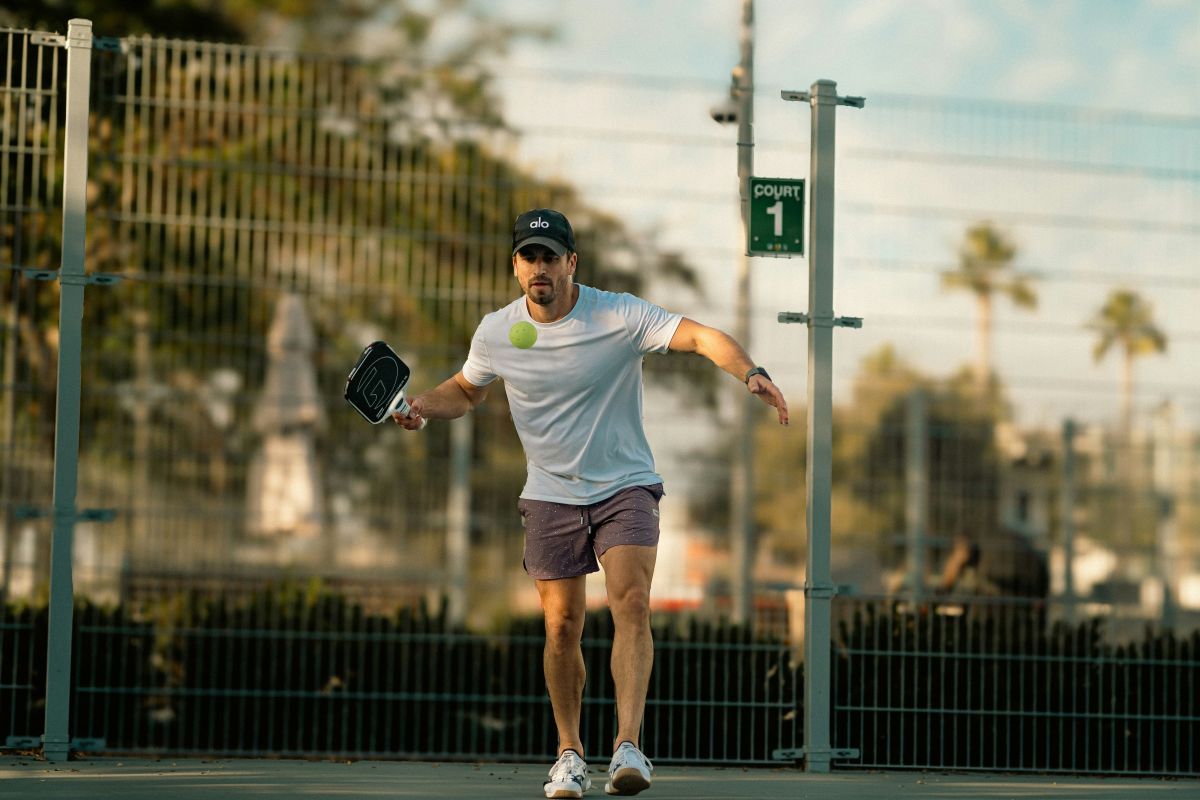
The serve in singles carries more weight than in doubles. With no partner at the net, the server must use placement and depth to shape the first exchange.
Power vs Placement
Power is effective when paired with control. However, placement and depth often generate more reliable advantages. A deep serve to the backhand corner forces a defensive return and limits offensive transition.
Balanced serve priorities include:
- Depth within two feet of baseline
- Targeting weaker wing
- Mixing pace to disrupt rhythm
- Using spin for trajectory variation
Over-serving under pressure increases fault rates. Reliable depth should remain the foundation.
Targeting Weaknesses
Strategic serving exploits predictable tendencies. Most recreational players have a weaker backhand. Repeated backhand isolation creates forced errors and short replies.
Serve targeting options:
- Wide backhand corner
- Body serve limiting extension
- Deep forehand to stretch movement
- Short angled serve to disrupt rhythm (used selectively)
Reading opponent movement early in the match informs serving adjustments.
Creating First-Ball Advantage
A strong serve sets up the second shot. Anticipating return trajectory allows early positioning for aggressive third-ball play.
Effective first-ball sequences include:
- Serve deep backhand → anticipate crosscourt return → attack open forehand
- Body serve → force weak float → approach net behind drive
The objective is not immediate winners but creating controlled offensive positioning.
Return of Serve Strategy in Singles
The return is equally important. A disciplined return neutralizes strong servers and establishes rally control.
Deep Cross-court Returns
Cross-court returns offer the highest margin for error and maximize distance over the net. Deep cross-court returns buy time for recovery and potential approach.
Benefits include:
- Increased net clearance
- Greater court length to target
- Immediate pressure on server’s movement
Short returns surrender momentum and allow servers to dictate the rally.
Offensive vs Neutral Returns
Recognizing attackable serves separates advanced players from intermediates. A short or floating serve should be driven aggressively with controlled pace. The objective is not reckless power, but a firm, directional drive that pressures the server immediately and forces a defensive reply.
Neutral returns focus on depth and positioning rather than power. A deep, high-margin return buys time to recover toward center and prevents the server from stepping inside the baseline.
Offensive returns should be selective and calculated, based on ball height, pace, and opponent positioning.
An additional layer of strategy involves understanding court geometry and recovery timing. When choosing an offensive return, aim cross-court unless the down-the-line lane is clearly exposed.
Cross-court drives offer greater net clearance and reduce error risk. After striking an aggressive return, recover quickly to neutral center position rather than admiring the shot. Even strong offensive returns can come back in singles, and failing to prepare for the next ball often erases the initial advantage.
Third-Shot Decision Making in Singles
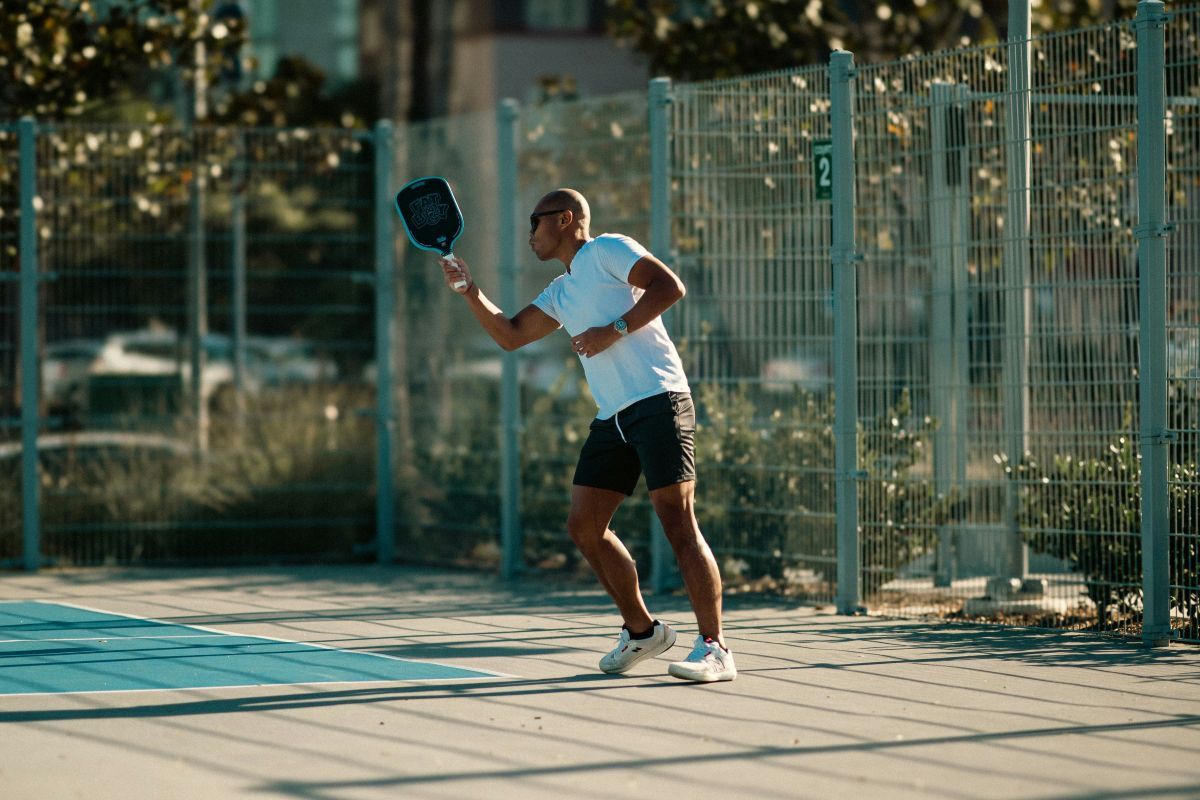
Unlike doubles, the third shot in singles frequently involves passing exchanges rather than kitchen drops.
Common third-shot strategies:
- Controlled topspin drive to push opponent back
- Deep crosscourt rally ball to extend exchange
- Passing shot when opponent approaches prematurely
Decision-making must align with court positioning and opponent movement.
Baseline vs Net Play in Singles Pickleball
Net play still matters in singles, but timing is critical. Approaching recklessly leads to easy passing shots.
When to Stay Back
Remaining at the baseline is appropriate during:
- Fast-paced passing exchanges
- When opponent demonstrates strong counterpunching
- When ball height remains below net level
Baseline discipline prevents overexposure at the kitchen.
Approaching the Kitchen
Approach only behind a ball that forces a weak or defensive reply. Typically, this follows a deep drive that pushes the opponent off balance.
Successful approaches require:
- Hitting deep before advancing
- Closing space decisively
- Preparing for a low volley
Hesitation in transition creates vulnerability.
Winning at the Net
Once established at the kitchen, controlled aggression finishes points. Volleys should target open angles rather than attempting excessive pace.
Net success depends on:
- Compact volley mechanics
- Targeting sideline openings
- Anticipating passing attempts
- Maintaining balance after contact
Net dominance must be earned through proper setup.
Movement & Footwork Strategy
Movement is the engine of singles pickleball strategy. Efficient footwork conserves energy and preserves positioning integrity.
Lateral Coverage Efficiency
Quick lateral shuffles outperform lunging. Crossover steps are used only when covering large distances.
Movement priorities:
- Explosive first step
- Balanced recovery
- Staying light on the balls of the feet
- Avoiding flat-footed pauses
Efficient footwork reduces fatigue and improves shot quality.
Transition Zone Management
The transition zone is high risk. Balls are often struck below net height. Attacking from this area leads to errors.
Strategic transition principles include:
- Use controlled resets when necessary
- Advance only behind quality depth
- Avoid low-percentage drives from poor position
Patience in transition preserves point structure.
Conditioning as Tactical Advantage
Singles rewards superior endurance. A player capable of maintaining depth and recovery in long rallies gains psychological and physical advantage.
Conditioning supports:
- Sustained lateral coverage
- Faster recovery between points
- Increased consistency late in games
- Greater tempo control
Fitness is not separate from strategy, it enables strategic execution.
High-Percentage Patterns That Win Singles Matches
Patterns convert theory into repeatable outcomes. Instead of relying on improvisation, strong singles players use structured point sequences to create predictable advantages. These patterns reduce randomness, increase decision clarity, and make pressure situations more manageable.
Below is a breakdown of high-percentage singles pickleball patterns and how they function tactically:
| Pattern Name | Setup & Execution Steps | Tactical Objective | Why It Works |
| Serve + First Ball Pattern | • Deep serve to backhand• Anticipate crosscourt return• Drive into open forehand space | Force early lateral movement | The deep backhand serve limits offensive return angles. Most players return crosscourt, creating a predictable opening to attack the forehand side. |
| Deep Return + Passing Shot Pattern | • Deep crosscourt return• Hold strong center position• Attack short ball down the line | Counter net-rushing opponents | A deep return delays the server’s advance. Holding center reduces angle exposure, allowing a clean passing lane when a short ball appears. |
| Wide Forehand Isolation | • Stretch opponent wide with angle• Recover immediately to center• Attack opposite side on next shot | Exploit recovery delay | Forcing width creates space on the opposite side. Quick center recovery ensures you control the next directional change. |
| Attack the Short Ball System | • Recognize mid-court ball• Step inside baseline• Drive with controlled topspin• Close toward kitchen | Transition from neutral to offensive control | Short balls signal opportunity. Controlled topspin allows aggressive pace with margin, while forward movement secures net advantage. |
Common Singles Pickleball Strategy Mistakes
Even strong players sabotage themselves through predictable errors. Frequent mistakes include:
- Failing to recover to center
- Attacking from transition zone without balance
- Serving short under pressure
- Overhitting when ahead
- Ignoring opponent tendencies
Correction requires structured awareness:
- Identify recurring breakdown
- Replace with defined tactical rule
- Practice replacement pattern deliberately
Players who analyze their mistakes objectively improve faster.
Building a Competitive Singles Development Path
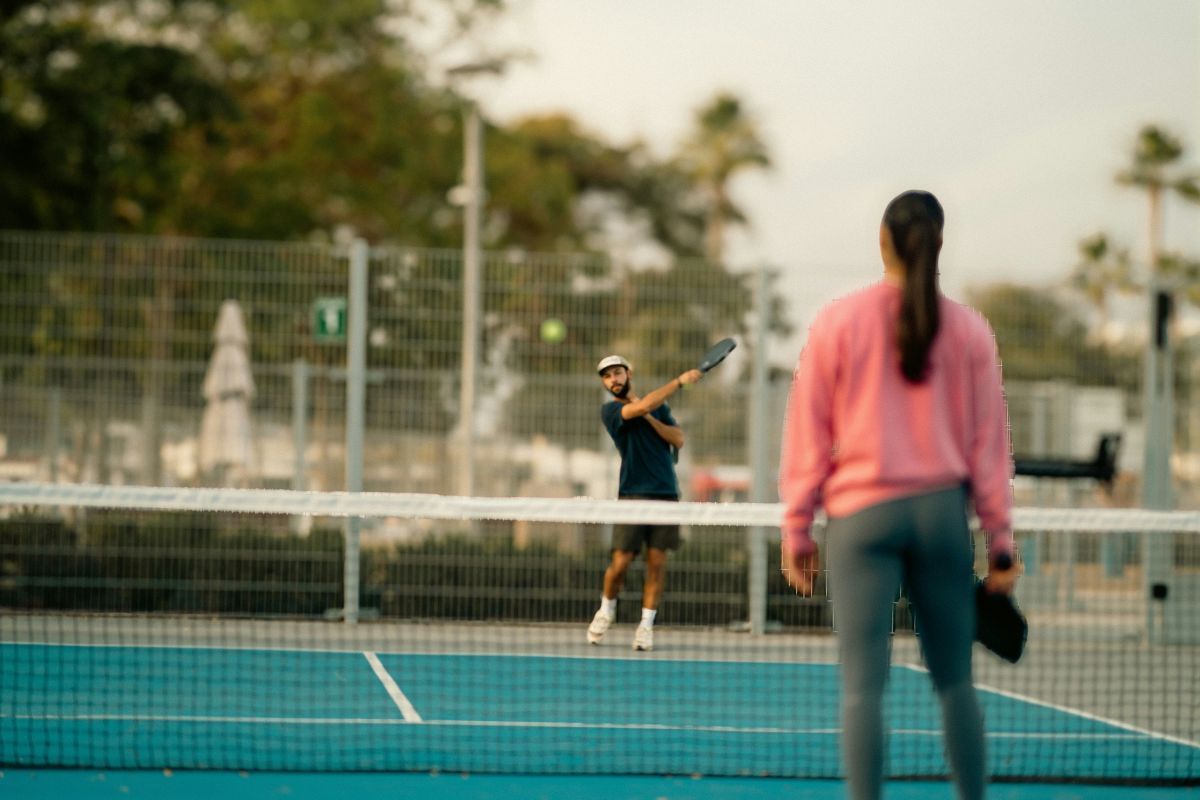
Strategic understanding improves through consistent match exposure and professional feedback. Casual play limits growth because patterns go uncorrected.
Structured development includes:
- Competitive singles ladders
- Match-focused clinics
- Tactical review sessions
- Video breakdown analysis
Bounce plays a meaningful role in this progression. By connecting players with certified coaches, organized leagues, and structured programming within their city, Bounce simplifies access to deliberate improvement.
Players serious about advancing their singles pickleball strategy benefit from environments where decision-making, positioning, and pattern execution are reinforced through repetition and coaching insight.