Three millimeters sounds like nothing. On a paddle spec sheet, it barely registers. But the performance difference between a 13mm and 16mm pickleball paddle is one of the most consequential equipment choices you'll make, and most players don't understand why until they've played with both.
Core thickness changes how a paddle stores and returns energy, and how easy it is to generate offense at the net. The difference shifts the fundamental character of the paddle.
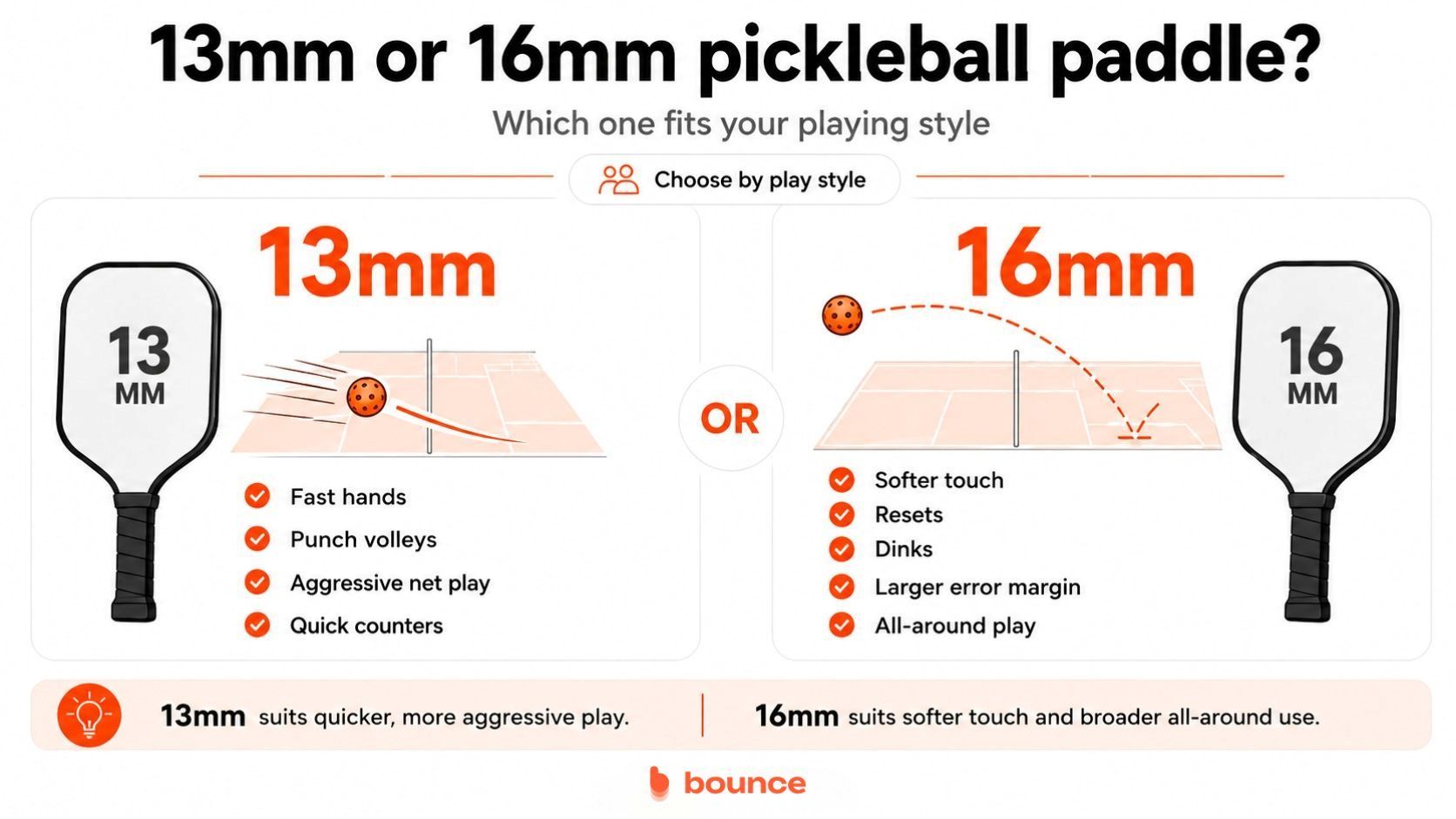
Want a quick answer? A 16mm paddle is thicker, softer at contact, more forgiving, and better suited to control-oriented play. A 13mm paddle is thinner, poppier, quicker to maneuver, and favors offensive net play at higher skill levels. Most players, especially those under 4.0, will play better with a 16mm. Players at 4.0 and above with an offensive style benefit from testing 13mm.
Why core thickness matters: the mechanics
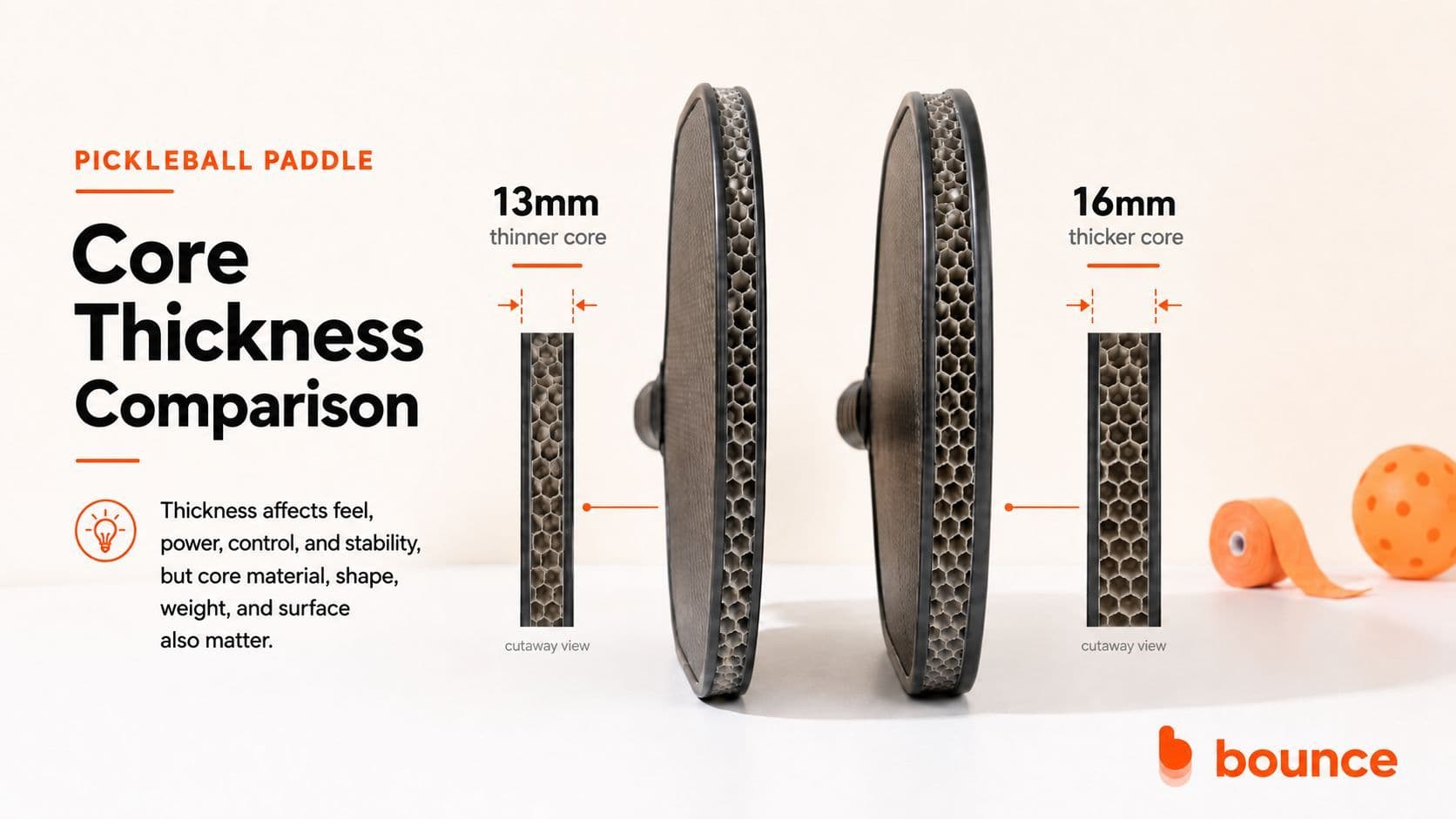
A pickleball paddle core is a polypropylene honeycomb structure. Picture a grid of interconnected cells running through the paddle's interior. When the ball strikes the face, those cells compress and rebound, transferring energy back into the ball. USA Pickleball's equipment standards govern approved paddle construction, though they define overall dimensions rather than specific core-thickness performance characteristics.
Thickness determines how much cell depth is available for that compression cycle.
A 16mm core has more cell depth. The ball compresses the core further before it rebounds, which means more energy is absorbed and the return is softer. A 13mm core has shallower depth. The compression cycle is shorter, the rebound faster. That's why 13mm paddles feel "poppier." The ball leaves the face more quickly.
This is the mechanism behind every performance difference between the two thicknesses. Understanding it makes the rest of this piece easier to apply.
The 6 performance dimensions
Power and pop
These are related but distinct. Power is ball speed on full swings (drives, serves, overheads). Pop is ball speed on short swings (dinks, punch volleys, flicks at the net).
The 16mm paddle generates more power on full swings. Its greater mass and plowthrough carry through the ball more effectively on big strokes. At the same time, it absorbs more pace on short shots because the thicker core is doing more of the energy-dampening work.
The 13mm paddle generates less power on full swings but more pop at the net. The faster rebound cycle makes the ball jump off the face on short compact strokes, which is exactly what you want when you're trying to finish a point at the kitchen line.
Control and feel
Control is how easily you can dictate pace and placement. Feel is the sensation at contact: what the paddle tells you about how cleanly the ball was struck.
The 16mm paddle controls pace more easily because the core absorbs energy for you. During a dink rally, a softer, more responsive core reduces the margin for error: the paddle does more of the work of slowing the ball down. Most players, including many advanced ones, describe 16mm paddles as having a "plusher," more forgiving feel.
The 13mm paddle puts more of the pace control burden on the player. The ball rebound is faster, so the margin between a good dink and a floated ball is narrower. Players who are comfortable at the kitchen will appreciate the extra feedback: the stiffer impact tells you exactly how cleanly you contacted the ball. Players still building their soft game will find it demanding.
Forgiveness and sweet spot
Forgiveness is how much energy the paddle returns on off-center hits. A forgiving paddle has a larger effective sweet spot: mishits don't drop significantly in pace or go significantly off-line.
The pickleball equipment choice comes down, in part, to what you can afford to lose. Thicker cores are more stable. Measured twistweight data (the metric for rotational stability on off-center contact) averages approximately 6.5 for 16mm paddles and 6.1 for 13mm paddles, based on independently tested paddle data from Pickleball Science.
In practical terms: mishits on a 16mm paddle stay closer to where you aimed them. Mishits on a 13mm paddle are more punishing.
If you're still developing consistent contact, the 16mm's larger sweet spot is a significant advantage.
Maneuverability and hand speed
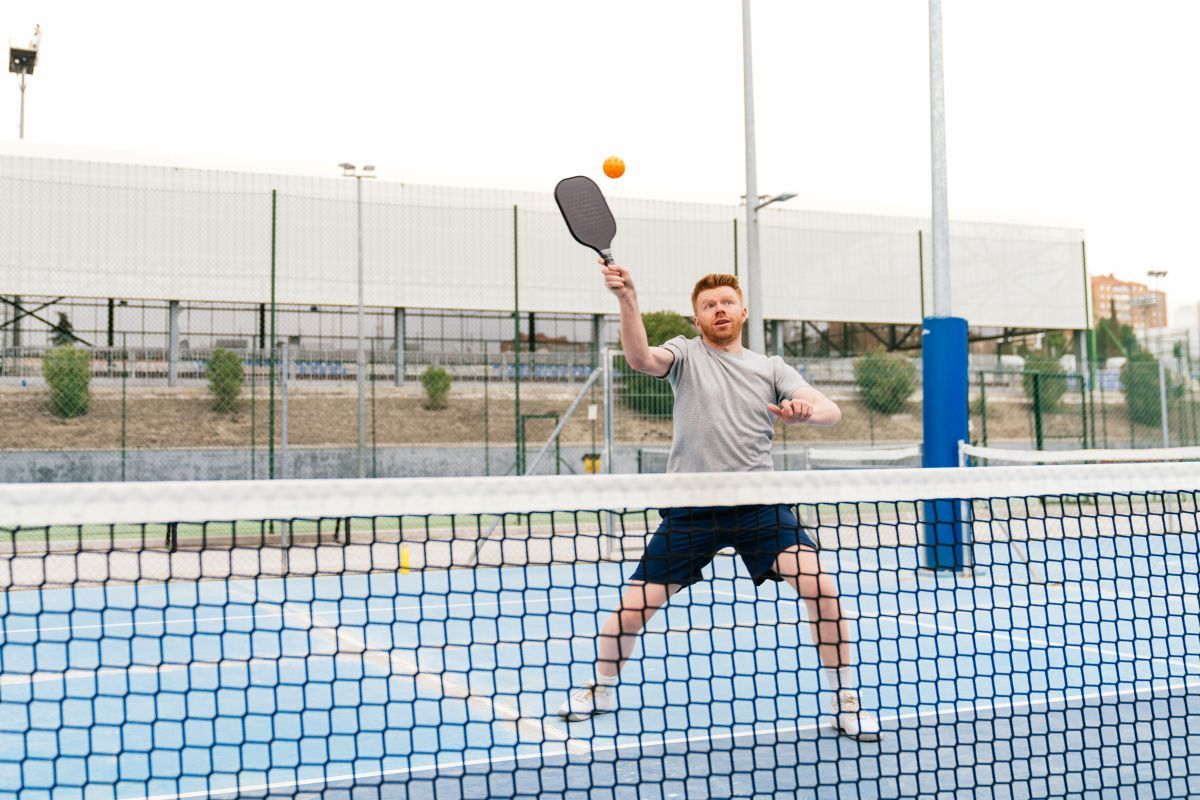
Maneuverability is how quickly and easily you can move and swing the paddle, particularly during fast volley exchanges at the net.
The 13mm paddle is lighter in the swing. Measured swingweight data averages approximately 117 for 16mm paddles and 113 for 13mm paddles. That 4-point gap is meaningful during rapid-fire net exchanges where tenths of a second determine whether you can get the paddle face positioned in time.
When you combine the 13mm's lighter swing with its extra pop on short strokes, the case for offensive net play becomes clear. Faster paddle movement plus faster ball exit is a combination that is genuinely difficult to defend at higher levels.
Spin
At full-swing speeds (serves and groundstrokes), the thickness difference produces minimal spin variation. The ball's contact with the paddle surface texture drives spin at those speeds more than core depth does.
At dinking speeds, the thicker 16mm core may produce slightly more spin because the ball compresses more deeply and stays on the face fractionally longer. The contact window is longer, giving the surface texture more time to grip and rotate the ball.
The difference is present but marginal. Spin should not be the primary driver of your thickness decision.
Launch angle
This is the most underappreciated dimension of the comparison. Launch angle describes the trajectory the ball takes immediately off the paddle face.
16mm paddles produce a higher, loopier launch angle on drives, drops, and roll volleys. 13mm paddles produce a flatter, more penetrating trajectory on the same shots.
For players who attack semi-high balls at the net and try to drive the ball at their opponents' feet, a flatter launch angle is advantageous. The ball stays low across the net and arrives at a difficult angle. For players who rely on topspin drops and cross-court dinks that dip into the kitchen, a higher launch angle gives more margin over the net.
Your natural shot mechanics will make one of these feel right almost immediately. If you find yourself fighting the ball flight on drops with a 16mm, a 13mm might match your stroke better.
Comparison table
| Attribute | 13mm | 16mm |
| Power (full swing) | Lower | Higher |
| Pop (net / short swing) | Higher | Lower |
| Control | Demands more from player | More forgiving |
| Feel at contact | Stiffer, more feedback | Softer, plusher |
| Sweet spot (twistweight avg) | ~6.1 | ~6.5 |
| Maneuverability (swingweight avg) | ~113 | ~117 |
| Spin (full swing) | Comparable | Comparable |
| Spin (dinking) | Slightly less | Slightly more |
| Launch angle | Flatter | Higher / loopier |
| Best suited for | Offensive net play, 4.0+ | All-around, 2.5-4.0 |
Who should use a 13mm paddle

A 13mm paddle suits players who have already built a reliable soft game and want more offensive capability at the net. The benefits only pay off if you can manage the demands.
At 2.5-3.5 level, the 13mm's smaller sweet spot and faster rebound will cost you more points than the extra pop will win. The forgiveness deficit is too large when you're still building consistent contact.
At 3.5-4.0, it depends on your playing style. If you're a net-aggressive player who wins points through speed-ups and put-aways, the 13mm is worth testing. If your game is built around reset ability and soft control, the 16mm suits you better at any skill level.
At 4.0 and above, the 13mm case is strongest. Players at that level can manage the tighter margin of error, and the additional hand speed and pop at the kitchen line is a genuine competitive advantage in fast exchanges.
Players working with a coach through Bounce lessons often test both thicknesses during the assessment phase. It's one of the faster ways to identify which direction your game is suited for before committing to a paddle.
Who should use a 16mm paddle
The 16mm paddle is the right starting point for almost everyone.
Beginners benefit from its larger sweet spot and error margin on soft shots, which are the hardest technical category to learn. Players in the 3.0-3.5 range benefit from how naturally it rewards consistent dink mechanics. Plenty of 4.0+ players continue using 16mm paddles because their game is built around control and placement rather than net aggression.
The pickleball shots that define high-level play (the third shot drop, the reset, the cross-court dink) are all shots where a 16mm core's energy absorption is working in your favor. Players who have built their game around mastering those shots often find the 13mm's extra pop actively works against what they're trying to do.
The 16mm also gives you more room to be consistent when you're off your game. On days when timing is slightly off or you're playing in less familiar conditions, the softer feel and larger sweet spot cover for small errors. The fastest way to confirm this is to try both thicknesses in actual gameplay. Bounce open play sessions are useful for exactly this kind of testing, since the drop-in format means you'll encounter players using different paddles regularly.
A note on 13mm vs 14mm naming
Some brands label their thinner paddles as 13mm; others label the same approximate thickness as 14mm. There is no strict industry standardization on the exact measurement, and the difference between a 13mm and a 14mm paddle from different manufacturers often falls within normal production tolerance.
USA Pickleball's approved paddle list governs which paddles can be used in sanctioned play, but the approval process does not enforce specific core thickness labels. If paddle selection across specifications is a decision you're working through, how to choose a pickleball paddle covers the full range of variables beyond core thickness alone.
When you see this comparison discussed elsewhere with 14mm vs 16mm framing, the underlying performance principles are the same as the 13mm vs 16mm comparison. The meaningful distinction is thin vs thick, not a specific millimeter reading.
Check individual paddle specifications if exact thickness matters to you. Some paddles in this category measure closer to 13.5mm and appear in either category depending on the brand.
Conclusion
The 13mm vs 16mm decision comes down to which trade-off matches your game.
For most players, 16mm is the right starting point. It covers more situations and forgives more errors. Players who have built enough game to absorb the 13mm's demands will know when they're ready to test it.
For players building their game through structured coaching and organized play, Bounce connects you with certified coaches and competitive formats in your city.