The erne is one of the most surprising moves you will ever see in a pickleball match. A player suddenly steps outside the boundary of the court, positions themselves right beside the net, and hits the ball at an angle their opponent has almost no chance of returning.
It looks like something that should not be allowed, but it is completely within the rules.
If you have never played pickleball before, think of it this way: the erne is like a shortcut that lets a player get much closer to the net than normal, as long as they stay outside a specific restricted zone.
The result is a shot that comes from an unexpected position and gives the other side almost zero time to react.
This guide explains what the erne is, why it is legal, how to hit it three different ways, when to use it, and how to stop it when someone uses it against you.
What Is the Erne Shot in Pickleball?
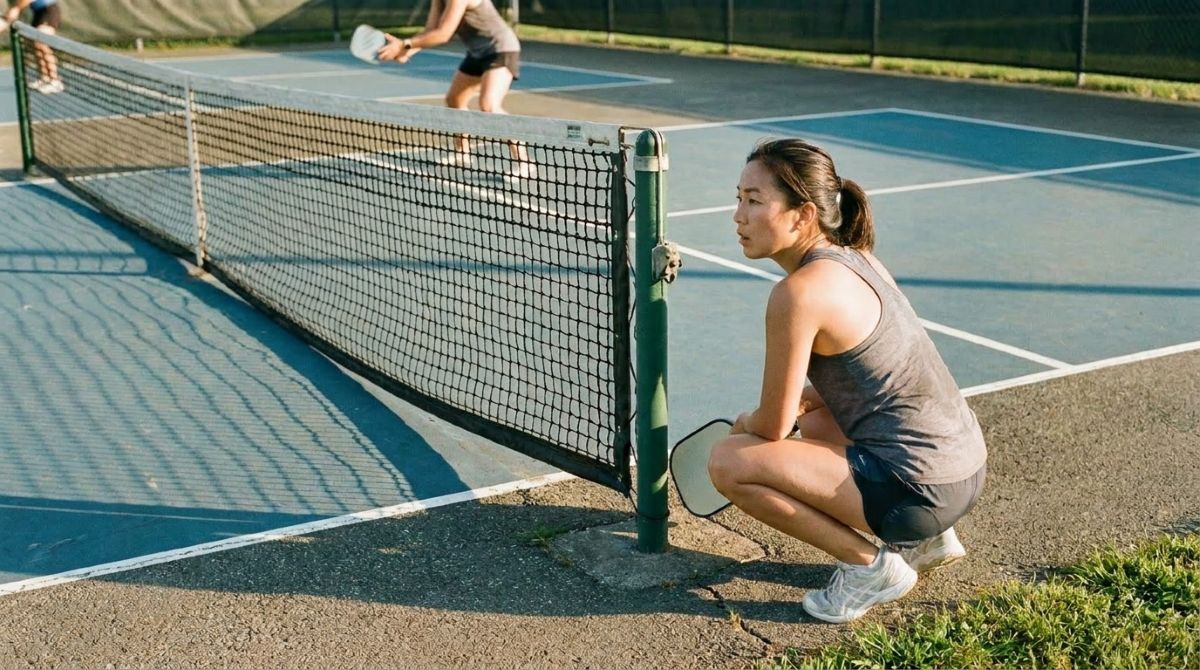
The erne is a shot hit from outside the court boundaries, beside the net, while standing beyond the sideline. Instead of hitting from inside the court like normal, the player moves to the out-of-bounds area next to the net and attacks the ball from there.
This gives them a sharp, downward angle that is almost impossible to defend.
In pickleball, there is a 7-foot zone on both sides of the net called the kitchen (officially called the non-volley zone). Players are not allowed to hit the ball out of the air while standing in this zone.
The erne works because the player steps outside the court entirely, which means they are not standing in the kitchen and are not breaking any rule.
The shot is named after Erne Perry, a professional player who used it repeatedly during the 2010 USAPA National Pickleball Tournament in Arizona. He did not invent it, but his consistent use of it brought it into the mainstream. The name itself was given by videographer Jeff Shank, who kept seeing Perry pull it off throughout the tournament.
At its core, the erne is not a showoff move. It is a tactical shot that puts the opponent in an impossible position, coming from a location they were not expecting and giving them almost no time to respond.
Is the Erne Legal in Pickleball?
Yes, the erne is legal, and this surprises many people who see it for the first time. The legality comes down to a specific rule about where a player is standing when they hit the ball.
What the non-volley zone rule actually says
According to USA Pickleball's official rulebook, Rule 9.B says that a player cannot hit the ball out of the air while standing inside the kitchen or touching the kitchen line. It says nothing about standing outside the court boundaries.
The out-of-bounds area just beyond the sideline, right next to the kitchen corner, is not part of the kitchen. A player standing there is not breaking the no-volley rule. As long as both feet are outside the kitchen when they make contact, the shot is legal.
What makes an erne a fault
An erne turns into a fault (a rule violation that costs you the point) if the player touches any part of the kitchen, including the kitchen lines, either when they hit the ball or because of the movement that follows.
It is also a fault if the player's body, paddle, or clothing touches the net, or if any part of them crosses to the other side of the net before hitting the ball. The shot must be made entirely from the player's own side.
How to Hit an Erne in Pickleball: Step by Step
There are three ways to execute the erne, and each one has a different level of difficulty, speed, and risk. Which one you use depends on how quickly the opportunity appears and how much time you have to get into position.
Method one: running around the kitchen
This is the safest version and the best one to learn first. The player moves sideways from behind the kitchen line, goes around the outside of the corner post, and arrives at the out-of-bounds position beside the net, all without ever stepping into the kitchen. Both feet land outside the court before the ball is hit.
Because you never enter the kitchen at all, there is no risk of accidentally touching it and getting called for a fault. The tradeoff is that this method takes more time, so you need to start moving earlier and read where the ball is going before your opponent even hits it.
Method two: running through the kitchen
The second method is faster but more technically demanding. The player cuts directly through the kitchen to get to the out-of-bounds position more quickly. Both feet must be fully outside the kitchen before the ball is struck.
If you hit the ball while even one foot is still inside or touching the kitchen line, it is a fault, no matter how well the shot itself looked. This method requires a short pause between getting into position and actually hitting the ball, and that discipline takes practice to develop.
Method three: jumping over the kitchen
The third method is the one you see in highlight clips. The player jumps from behind the kitchen line, clears the kitchen completely while in the air, hits the ball during the jump, and lands outside the sideline.
Because they never touched the kitchen, there is no re-establishment rule to worry about.
This version is explosive, almost impossible to defend, and also the most injury-prone method of the three. Rapid lateral lunges and jumps place significant stress on your hips and lower extremities, and research confirms they are among the leading causes of injury in pickleball.
Learn the first two methods well before trying this one in a real match.
Pickleball Erne Setup and Timing: When to Go for It
Knowing how to physically hit the erne is only half the challenge. Spotting the right opportunity is equally important. The most perfectly executed erne at the wrong moment still results in either a fault or a shot the opponent was already ready for.
Reading the dink pattern
In pickleball, a dink is a soft, controlled shot that lands just over the net inside the kitchen. It is one of the most important shots in the game, and understanding how dinks work will help you see why erne opportunities appear in the first place.
They usually surface during extended dink exchanges when the opponent keeps sending the ball toward one specific side of the court, near the sideline.
When you notice that pattern forming, that is your signal. Wait for a dink that is slightly high toward the sideline, because that is the ball you can actually reach and attack from outside the court.
Moving too early is a common mistake. If you start sprinting toward the sideline before the opponent has even hit the ball, they will see you and simply redirect their shot toward the open space you just left.
Time your move at contact, or a split second before if their body language already gives it away.
Positioning before the opportunity
Before you can attempt an erne, you need to gradually drift toward the sideline during the dink rally. If you are standing in the middle of the kitchen line, you simply cannot cover the distance to the out-of-bounds position fast enough.
Move toward the sideline slowly and naturally, without making your intention obvious. The shorter the distance you have to travel when the right ball arrives, the more likely your erne attempt will succeed.
In doubles, this matters even more. When you move toward the sideline for an erne, the center is left exposed. Your partner must shift toward the middle to cover that gap, which means clear communication before you make your move is essential.
Forcing the setup
Advanced players do not just wait for erne opportunities to appear. They engineer them through their own dinking.
By consistently sending dinks toward the opponent's backhand corner or toward the far sideline, they push the opponent into positions where the return is more likely to come back to that same sideline.
The more you can control where the opponent's dinks land, the more predictable their shots become, and the more reliably you can set up your own erne.
When not to go for it
If your opponent is moving well, redirecting their dinks unpredictably, or has already noticed you drifting toward the sideline, the erne is not worth it. Committing to an erne in those situations leaves a large gap in your court coverage with no reward.
The erne carries real risk. Abrupt lateral sprints and mid-rally direction changes are among the most common causes of pickleball injuries, so committing to the move at the wrong moment compounds both tactical and physical risk.
When the conditions are not right, staying at the kitchen line and continuing the rally is almost always the smarter play.
Players who want to develop the pattern recognition and positioning skills that make erne attempts realistic benefit most from working with a coach.
Bounce connects players with certified coaches in their city who can build specific drilling routines around advanced shot mechanics, including erne timing and setup, in real playing conditions.
Bert vs Erne Pickleball: What Is the Difference?
Once you understand the erne, its close relative the bert is easy to grasp. A bert is the exact same shot, hit from the exact same out-of-bounds position beside the net, with the same footwork rules. The only difference is which side of the court it comes from.
An erne is hit from your own side of the court. A bert is hit from your partner's side. In a doubles match, a bert means you sprint across the court in front of your partner to take the shot from their sideline instead of your own.
The name comes from Sesame Street. Bert is Ernie's best friend on the show, so the cross-court version of the erne was named after him. It is a fitting name because the bert requires your partner's full cooperation and trust before you attempt it.
The bert is riskier than the erne because it involves more court to cover and leaves your own side of the court almost completely exposed. Before attempting either shot in a real match, make sure you and your partner are solid on how doubles positioning and communication work so neither of you is caught off guard mid-rally.
How to Defend Against an Erne
The best defense against the erne is recognizing it early. By the time the ball is already flying toward an opponent standing outside the sideline, it is too late to do much about it. Your defense starts before they even move.
Watch your opponent's feet
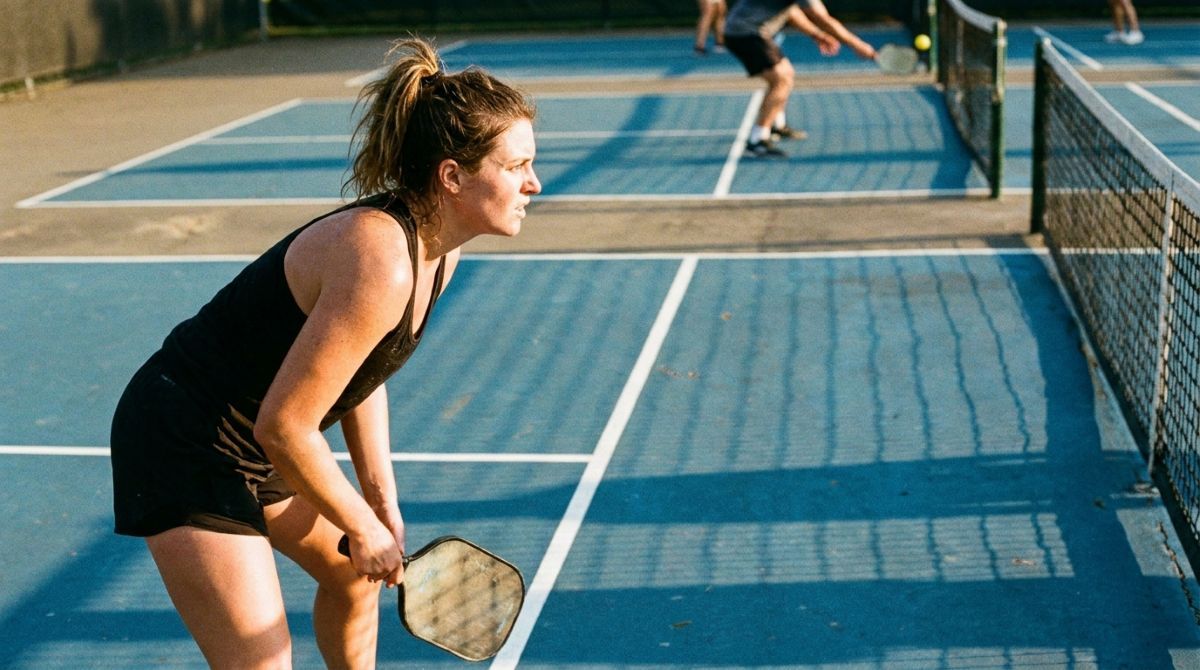
The clearest warning sign of an incoming erne is your opponent slowly sliding toward the sideline during a dink rally. Most players cannot pull off an erne from the center of the court because the distance is too great. If you see them drifting wide, that is your cue.
As soon as you notice that sideways movement, redirect your next dink toward the middle of the court. A ball that lands centrally removes the erne entirely, because the player outside the sideline cannot reach a ball that is too far away from them.
Keep dinks low and toward the middle
The erne works best against dinks that are slightly high and aimed toward the sideline. A low, centrally placed dink gives the erne player nothing to attack from outside the court.
Player rating systems such as DUPR and VAIR, an AI-powered rating platform that tracks skill through adaptive performance modeling, are increasingly used by competitive players to identify opponents who rely on shots like the erne.
Understanding which dinks create erne opportunities helps you see which of your own shots are safe and which leave you exposed.
Respond with soft hands if caught
If the erne catches you off guard, avoid matching the pace. The erne comes from close range at a steep downward angle, and swinging hard back usually just creates an error.
Instead, use a soft, relaxed paddle face to absorb the ball and keep it in play. A gentle reset forces the erne player to recover from outside the court and get back into position, which creates a brief opening you can use with your next shot.
Use the erne player's absence against them
When an opponent commits to an erne and fails to win the point outright, they are standing outside the court on the sideline. The center is briefly open. A shot aimed toward the middle or toward the side they vacated can be a clean winner.
Building the erne into your game works best as part of a structured training plan, not just casual experimentation.
Bounce makes it straightforward to find a verified pickleball coach in your city who can evaluate your kitchen game and introduce erne drilling when your foundational skills are ready for it.
When the Erne Makes Sense in Your Game
The erne is a high-reward shot, but it is not the right move in every situation. Using it at the wrong time can hurt your position more than it helps.
Use it when you are at least a 4.0 level player
The erne is widely considered an advanced shot, 4.0 and above, on the standard pickleball skill scale. Below that level, the most common results of an erne attempt are a footwork fault, a missed ball, or leaving a large gap in the court for the opponent to exploit.
Skills like soft dinking, kitchen control, and reading the ball early take time to develop, and all of them should be reliably in place before the erne becomes a realistic option in your game.
Use it when a dink pattern is established
Attempting an erne on the first or second dink of a rally almost never works. There is no pattern yet, and the opponent has not been pushed into a predictable position.
Wait until you have seen the same dink direction two or three times before you commit to the erne movement. When the pattern is clear, the ball lands where you expect and your movement will not be wasted.
Use it as a match disruptor, not a primary shot
The erne is most effective when used sparingly and unexpectedly. Players who attempt it on almost every rally make it predictable, and predictable opponents are easy to adjust against.
Used at the right moment, it disrupts your opponent's rhythm, introduces doubt into their dinking decisions, and wins points that no other shot from the kitchen line could have produced.
Erne vs Bert: Quick Comparison
| Feature | Erne | Bert |
| Execution side | Player's own sideline | Partner's sideline |
| Movement direction | Lateral toward own sideline | Across court to partner's sideline |
| Footwork rules | Both feet outside NVZ before contact | Same. Both feet outside NVZ |
| Court exposure created | Center of own side | Entire own half of court |
| Partner coordination needed | Yes. Partner covers center | Yes. Partner covers vacated side |
| Risk level | High | Very high |
| Common player level | 4.0 and above | 4.5 and above |
Conclusion
The erne rewards players who are patient, observant, and decisive. It is not about athleticism or flash. It is about reading the rally, positioning yourself quietly throughout the exchange, and committing to the move at the exact right moment.
Understanding the erne also makes you a sharper defensive player. Knowing what conditions make an erne possible tells you exactly which dinks to avoid hitting and which of your opponents' movements to watch for.
If you are ready to build the kitchen control and advanced shot mechanics that make the erne a real part of your game, Bounce connects you with certified coaches and organized play environments in your city.
Find a coach, book a session, and start building the skills behind the shot.
FAQs
What is an erne in pickleball?
An erne is a shot hit from outside the court boundaries, beside the net, while standing beyond the sideline.
The player moves out of the normal playing area, positions themselves next to the kitchen corner, and attacks the ball from there, giving the opponent almost no time to react.
Is the erne legal in pickleball?
Yes, the erne is fully legal. The player must have both feet outside the non-volley zone before making contact, must not touch the net, and must not let their momentum carry them into the kitchen after the shot.
As long as those conditions are met, the erne does not violate any rule.
How is the erne different from a regular volley?
A regular volley is hit from inside the court, behind the kitchen line.
An erne is hit from outside the court entirely, beside the kitchen corner, which gives the player a much sharper angle and much closer proximity to the net than any legal in-court position allows.
What is a bert in pickleball?
A bert is the same shot as an erne, but hit from the partner's side of the court instead of your own. You move across the court in front of your partner to take the shot from the opposite sideline.
It is riskier than a standard erne and requires clear communication with your doubles partner before attempting it.
When is the best time to attempt an erne?
The best time is during a dink rally where the opponent has repeatedly sent the ball toward the same sideline. When a clear pattern exists and the incoming ball is slightly high and aimed toward that sideline, that is the window to commit to the erne movement.
What happens if I touch the kitchen during an erne?
Touching the kitchen or the kitchen line while hitting a volley is a fault, which means you lose the point.
If you run through the kitchen to reach the out-of-bounds position, you must fully re-establish both feet outside the kitchen before you make contact with the ball. Failing to do so results in a fault regardless of how the shot looks.
How do I defend against an erne?
Watch for your opponent drifting toward the sideline during a dink rally. If you notice that, redirect your next dink toward the center of the court. Low, central dinks remove the erne opportunity.
If one catches you off guard, use a soft paddle face to absorb the pace and reset the rally rather than trying to counter hard.
Do I need to be an advanced player to use the erne?
The erne is most appropriate for players at the 4.0 skill level and above. It requires reliable dinking, the ability to read the ball early, fast lateral movement, and disciplined footwork under pressure.
Building those skills first makes the erne a useful tactical option rather than a high-risk gamble.