Most players buy a paddle from a rack, a brand ad, or a playing partner recommendation. Then they blame their hands when the paddle gives the wrong feedback.
Graphite vs fiberglass pickleball paddles is really a face-material decision. Graphite usually feels firmer and more controlled. Fiberglass usually feels livelier and easier to drive. The right choice depends on your current level, swing speed, and the shots you need to clean up.
Want a quick answer? Graphite paddles usually suit players who want firmer feedback, cleaner touch, and more control at the kitchen. Fiberglass paddles usually suit players who want easier depth and power while their stroke mechanics are still developing. Face material matters, but core thickness, paddle weight, surface texture, and construction can change how either material plays.
This guide covers what both face materials do, where each one fits in player development, and how to choose without getting trapped by paddle marketing.
What the paddle face actually changes
A pickleball paddle face is the ball-contact layer bonded over the core. Most modern paddles use a polymer honeycomb core, then a face layer made from fiberglass, graphite, carbon fiber, or a blended laminate.
That face layer changes stiffness, surface feel, feedback, and energy return. CompositesLab explains that composite materials combine fiber reinforcements with a resin matrix, and can also include core materials, fillers, additives, and surface finishes. That same basic idea explains why two paddles with similar shapes can feel completely different at contact.
For players, the result is simple enough to feel. A firmer face gives crisper feedback. A more flexible face gives easier depth and a livelier response. Bad contact still produces weak shots. Each material rewards a different type of swing.
Graphite paddles: firmer feel, cleaner feedback
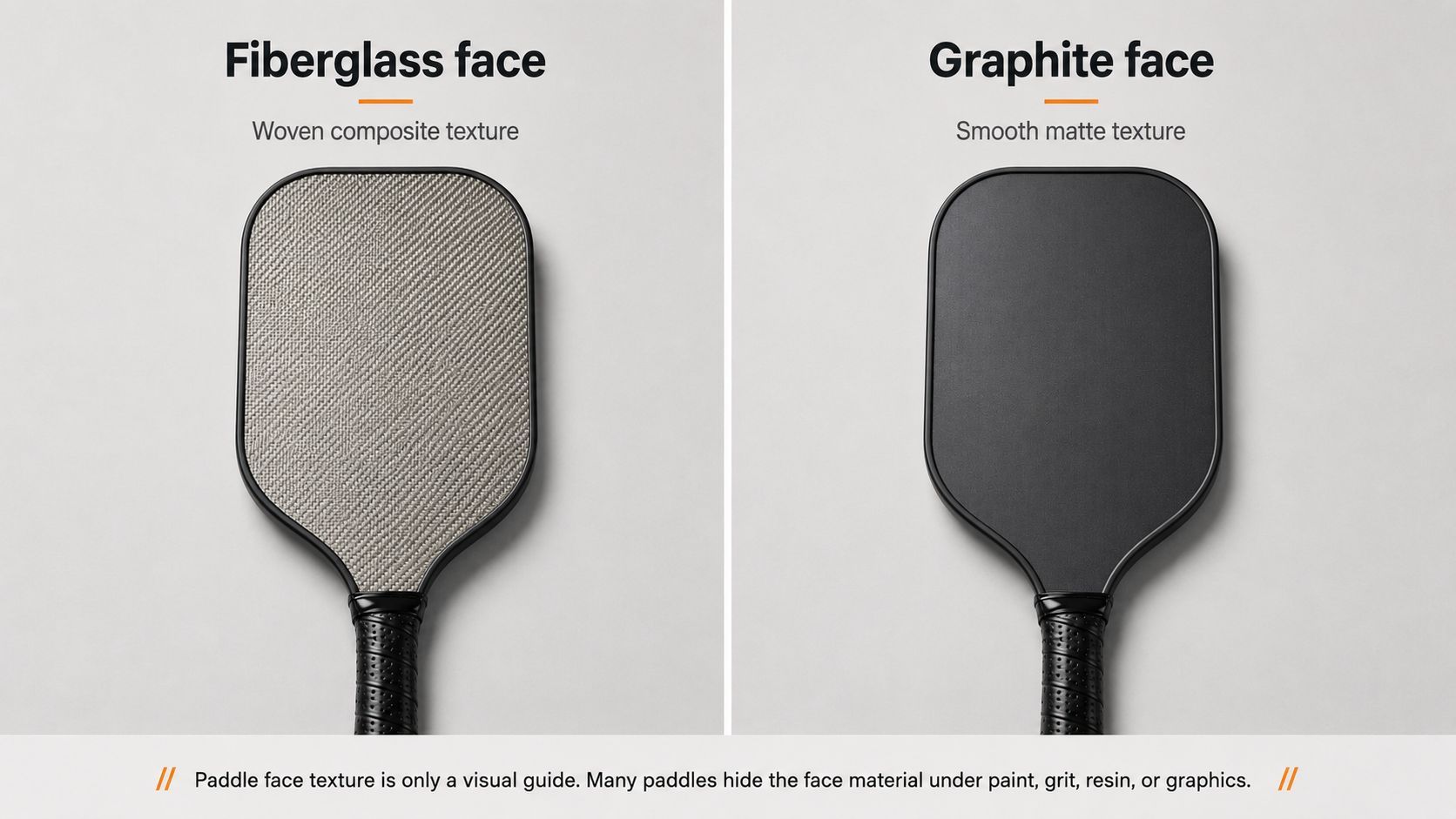
In pickleball paddle specs, graphite usually refers to a thin graphite or graphite-composite face layer bonded over the paddle core. It tends to feel firmer than fiberglass, though the exact feel depends on the full paddle construction.
Because graphite faces usually deflect less at contact, the ball comes off with a crisp response. Players with reliable contact often like that because touch shots respond more predictably.
Graphite is a strong fit when you are working on four things: dinking depth, third-shot drops, reset control, and placement under pressure.
It also pairs well with players who already understand pickleball spin. Some textured fiberglass faces grip the ball more easily at low swing speeds, so the brushing path matters more with graphite.
Fiberglass paddles: livelier feel, easier depth
Fiberglass faces use glass fiber reinforcement in a resin matrix. Many brands label these paddles as composite paddles, which is why shoppers often see fiberglass and composite used together.
Fiberglass usually flexes more at contact than graphite. Players describe that feel as pop, which means the paddle helps create depth with a smaller or slower swing.
That lively feel can still sit inside legal paddle construction. The USA Pickleball Equipment Standards Manual regulates paddle surface texture, friction, reflection, size, materials, and power-related testing for approved equipment. A legal fiberglass paddle can still feel lively within those limits.
Fiberglass is a strong fit when you are still building four basics: consistent contact point, swing path, depth control, and serve pace.
Graphite vs carbon fiber vs fiberglass
Graphite and carbon fiber get mixed up because both are carbon-based terms. Paddle marketing makes that worse.
Carbon fiber is a fiber reinforcement that can be woven or laid into sheets, then bonded with resin. The ACMA composite materials primer describes fiberglass, carbon, and aramid as common reinforcement fibers used in composite materials.
Graphite paddle faces are usually marketed as graphite or graphite-composite layers. They often feel firmer than fiberglass and less demanding than many raw carbon fiber faces.
Carbon fiber usually plays stiffer and more controlled than fiberglass, especially when paired with a textured raw carbon face. Spin comes from surface finish, friction, core response, paddle shape, and compliance testing working together.
| Material label | Typical feel | Best fit |
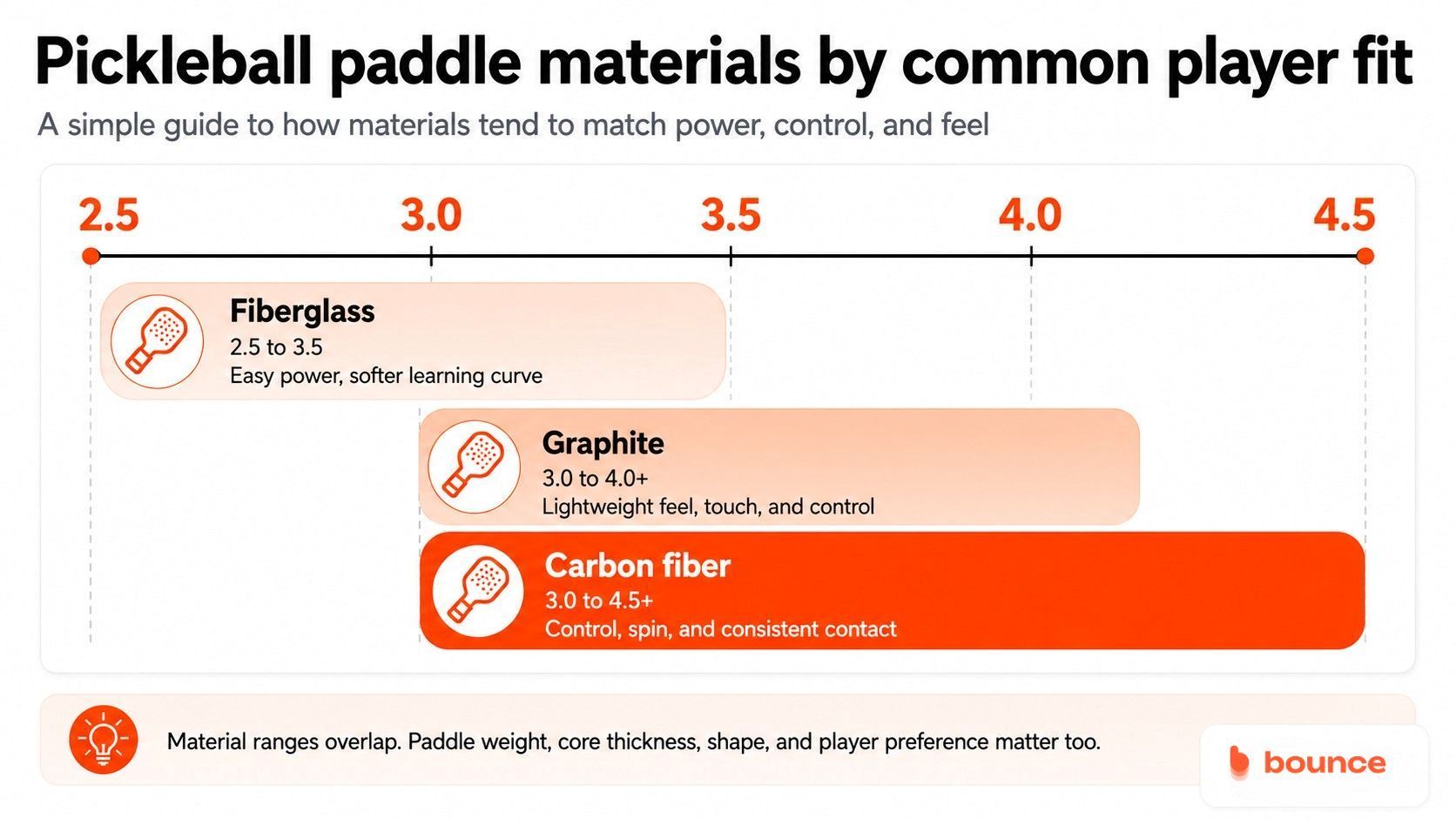
| Fiberglass or composite | Lively, easier power, softer feedback | Beginners and power-first 2.5 to 3.5 players |
| Graphite | Crisp, firmer feedback, control oriented | 3.0+ players who want touch and placement |
| Carbon fiber | Firm, spin-friendly when textured, more demanding | 3.5+ players with reliable contact and touch |
Face material works with core, weight, and texture
Face material gets the attention because it appears high on the spec sheet. Paddle feel comes from the whole build.
Core thickness changes how much the paddle absorbs and returns energy. A thinner 13 mm or 14 mm core often feels quicker and more powerful. A 16 mm core often feels softer and steadier on resets, dinks, and blocks.
Weight changes timing. A heavier paddle can drive the ball with less effort, but it can slow your hands at the kitchen. A lighter paddle can move faster in hand battles, but it may give you less stability on off-center contact.
Surface texture changes spin. USA Pickleball tests roughness and friction because excess surface grip can change how much spin a paddle can create. That is why tournament players should check the approved list before buying a paddle for sanctioned play.
How skill level maps to paddle face material
The best paddle choice changes as your game changes.
At 2.5 to 3.0, you are still building repeatable contact, rally depth, serve placement, and simple resets. A fiberglass face gives more help with depth while your swing path is still developing.
At 3.0 to 3.5, you start spending more points at the kitchen line. Dinking, third-shot drops, and controlled blocks matter more. A graphite face can make those shots easier to measure because the feedback is cleaner.
At 3.5 and above, touch, spin, and speed control drive more points. Graphite or carbon fiber usually makes sense here, especially if you already create your own pace.
A private lesson can help you separate a paddle problem from a technique problem. That matters most when you are moving from beginner gear into a control-first paddle and every miss suddenly feels like the paddle changed overnight.
Where graphite and fiberglass perform differently on court
The material difference shows up fastest on shots where touch, pace, and contact quality matter.
Dinks at the kitchen line
Graphite usually fits dinking better once your contact point is steady. The firmer face gives a cleaner sense of how much pace you added. That helps you land the ball lower and shorter without guessing.
Fiberglass can still dink well, especially in a thicker control paddle. The player needs to account for the livelier face, especially on slightly late contact.
Third-shot drops
Graphite usually gives more predictable feedback on third-shot drops. The shot asks you to take pace off the ball and land it softly in the kitchen.
Fiberglass can make drops harder for players who already swing too big. It adds depth easily, which helps drives and serves, then asks for more touch on soft shots.
Baseline drives
Fiberglass often feels better from the baseline for players with moderate swing speed. It helps the ball travel deeper without forcing a full swing every time.
Graphite can still drive well, but it asks more from your mechanics. Once you create your own pace, the control trade-off often feels worth it.
Serve and return
Fiberglass can help newer players hit deeper serves with less effort. Graphite can help stronger players place serves and returns with tighter margins.
For tournament players, the paddle still needs to be approved. The USA Pickleball Equipment Standards Manual and approved paddle database are the sources that matter for sanctioned play.
Graphite vs fiberglass pickleball paddles: head-to-head comparison
| Category | Graphite | Fiberglass |
| Typical feel | Crisp and firmer | Lively and more forgiving |
| Power help | Moderate | Higher at slower swing speeds |
| Control feedback | Cleaner for touch shots | Softer, with more rebound |
| Dinks | Better for steady contact and placement | Good with touch, livelier on mishits |
| Third-shot drops | Predictable feedback | Requires more speed control |
| Baseline drives | Good with developed mechanics | Easier depth for newer players |
| Spin | Technique-dependent | Texture-dependent |
| Likely fit | 3.0+ players | 2.5 to 3.5 players |
| Common spec labels | Graphite, graphite composite | Fiberglass, composite |
| Tournament note | Check approval status | Check approval status |
Durability and compliance: what to check before buying
Paddle life depends on use, storage, construction quality, and how often you play. Face material affects the wear pattern, but it does not give you a fixed expiration date.
Graphite and carbon fiber composite faces can suffer from delamination, where bonded layers separate inside the laminate. ASM International describes delamination as a common failure mode in composite laminates. In paddles, the clue is usually a hollow sound, a soft spot, or a dead zone on the face.
Fiberglass faces often show wear as the surface texture smooths out. The paddle may still feel playable, but spin response can drop. Players who hit 3 to 5 sessions per week should inspect the face every few months and compare it against how it felt when new.
For sanctioned competition, check the USA Pickleball Approved Paddle List before buying. Approval status can matter more than the material name printed on the paddle.
Hybrid and composite paddles: read the face layer first
The word composite can mean different things in paddle marketing. Sometimes it points to fiberglass. Sometimes it means a blended layup with fiberglass, graphite, carbon fiber, or other layers.
Read the ball-contact face first. A carbon fiber face with fiberglass backing usually plays firmer than a fiberglass face with carbon backing. The outer layer touches the ball, so it drives the first impression at contact.
Hybrid paddles are worth testing because two paddles with similar material lists can feel different. Layup thickness, resin, core density, edge foam, shape, and weight all change the result.
The easiest test is live play. Borrow paddles during open play and hit the same four shots with each one: dink, third-shot drop, drive, and serve. Ten minutes tells you more than a spec sheet when the builds are close.
How to choose between graphite and fiberglass right now
Choose fiberglass when you are newer, need easier depth, and still miss because your swing speed changes from shot to shot. It gives you more help while you build reliable mechanics.
Choose graphite when your misses come from overhitting, floating dinks, or struggling to keep drops low. It gives you clearer feedback when placement matters more than free power.
Consider carbon fiber when your touch game is steady and you want a firmer, spin-friendly face. It can reward better mechanics, but it can also expose sloppy contact.
If you are also weighing core thickness, grip size, paddle weight, and shape, the how to choose a pickleball paddle framework covers those variables together.
Players new to the category can use the broader pickleball equipment breakdown to sort out paddles, balls, shoes, and the gear that actually affects play.
The two worst reasons to buy a paddle are looks and peer pressure. Both tell you very little about whether the face material fits your game.
Conclusion
Graphite and fiberglass paddles feel different because they behave differently at contact. Graphite usually gives firmer feedback and better touch control. Fiberglass usually gives easier depth and power.
At 2.5 to 3.5, fiberglass can give you margin while your mechanics catch up. At 3.0 and above, graphite starts to make more sense if you spend more points at the kitchen and want cleaner feedback.
The common mistake is buying a paddle for the player you want to be 12 months from now. Buy for the shots you are trying to fix today.
For players building their game through structured coaching and organized play, Bounce connects you with certified coaches, courts, leagues, and competitive formats in your city.
FAQ
What is the main difference between graphite and fiberglass pickleball paddles?
Graphite paddles usually feel firmer and more controlled. Fiberglass paddles usually feel livelier and easier to drive. The difference comes from how the face responds at contact, though core thickness, weight, texture, and construction can change the feel.
Is graphite or fiberglass better for beginners?
Fiberglass is usually the better starting point for beginners. It gives easier depth and power while a player is still building consistent swing mechanics. A beginner can use graphite, but it asks for cleaner contact sooner.
Are graphite paddles good for control?
Yes. Graphite paddles are usually chosen for control, touch, and firmer feedback. They work best for players who already make steady contact and want better placement on dinks, drops, and blocks.
Do fiberglass paddles have more power?
Fiberglass paddles often feel more powerful at slower or moderate swing speeds. The face tends to feel more flexible and lively, which helps newer players create depth without swinging harder.
Is carbon fiber the same as graphite in pickleball paddles?
Carbon fiber and graphite are related carbon-based terms, but they are used differently in paddle construction and marketing. Carbon fiber usually refers to a fiber-reinforced face, often woven or layered with resin. Graphite usually refers to a graphite or graphite-composite face layer.
Does paddle face material affect spin?
Yes, but surface texture and technique matter as much as the material label. Fiberglass can grip the ball well at lower swing speeds. Graphite can produce good spin with a deliberate brushing stroke. Raw carbon fiber faces often feel spin-friendly when the surface texture is built for it and stays within USA Pickleball limits.
How long do graphite and fiberglass pickleball paddles last?
Many regular players get 12 to 18 months of strong performance, but that range can change a lot. Play frequency, storage, edge impacts, heat, paddle construction, and surface wear all matter. Inspect the face every few months if you play several times per week.
Can I use a graphite or fiberglass paddle in tournaments?
Yes, if the paddle appears on the USA Pickleball Approved Paddle List. The full paddle has to meet equipment standards. The material label is only one part of the spec.