If you already play tennis, padel will feel familiar for about 5 minutes. Then the ball hits the back glass, stays live, and your tennis instincts start arguing with the court.
That is the real padel vs tennis difference. The score sounds familiar. The net looks familiar. But the smaller court, underhand serve, glass walls, and standard doubles format change how points are built.
Quick answer: Padel and tennis share the same scoring language and some court vocabulary, but the games play very differently. Standard padel is doubles, uses a smaller enclosed court with glass walls, requires an underhand serve, and rewards placement over power. If you play tennis, most of your footwork transfers, but your serve mechanics, swing length, and tactical approach need to change.
This comparison assumes you know basic tennis language and want the specific differences that matter on court. The goal is not to prove one sport is better. It is to show what actually changes when you move from an open tennis court to an enclosed padel court.
The comparison matters more now because padel is no longer a niche club experiment. The FIP World Padel Report 2025 tracks the sport’s global expansion across players, courts, and national markets.
Padel vs tennis at a glance
The practical difference: tennis gives you more open space and a stronger serve. Padel gives you longer rallies, more rebounds, and more doubles communication.
| Padel | Tennis | |
| Court size | 20m x 10m | 23.77m x 10.97m for doubles |
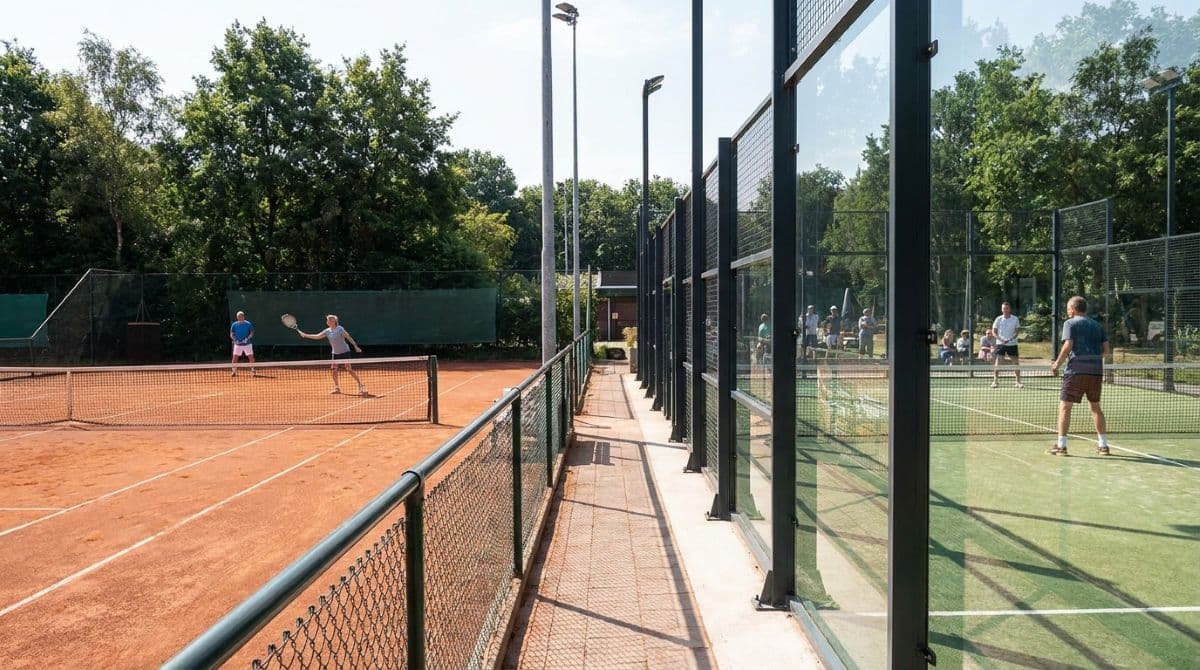
| Court structure | Glass walls and mesh | Open court with boundary lines |
| Main format | Standard play is doubles | Singles or doubles |
| Serve | Underhand after a bounce | Overhead toss and strike |
| Walls | In play after bounce | Out of bounds |
| Scoring | 15, 30, 40, with golden point options | 15, 30, 40, advantage at deuce |
| Racket | Solid and perforated | Strung frame |
| Ball | Lower pressure, lower bounce | Higher pressure, livelier bounce |
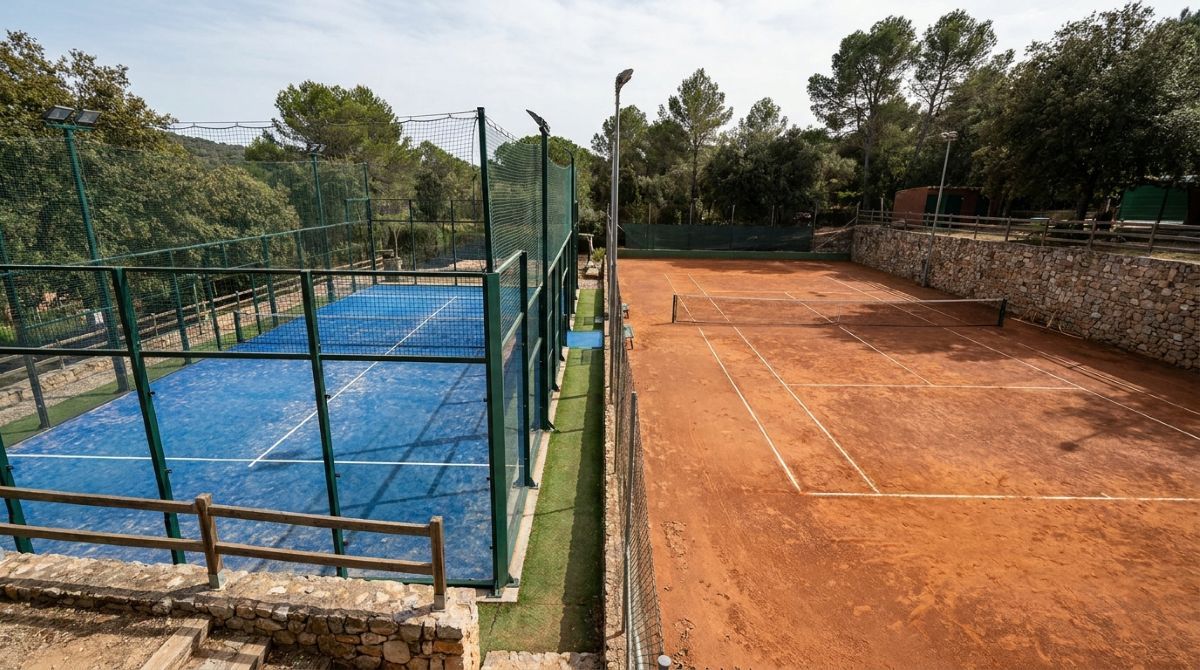
The courts: size, structure, and what changes because of it
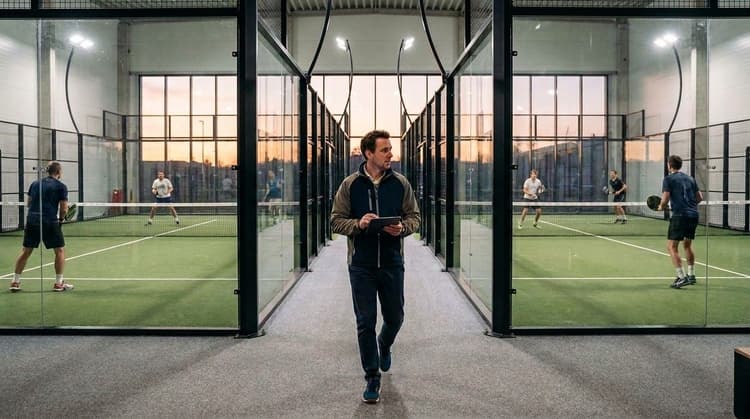
A regulation padel court is 20m x 10m and fully enclosed. The FIP rules documents list the official Rules of Padel under Sport / Competitions, which is the primary reference for court and play rules.
The Rules of Padel state that the court is 10 meters wide by 20 meters long, with a net 0.88m high at the center and 0.92m at the ends.
A tennis doubles court is 23.77m x 10.97m. The ITF rules page is the official source for the Rules of Tennis and related regulations.
The padel court is smaller, but that does not make every point easier. The glass walls change the geometry. A ball that would be gone in tennis can rebound back into play in padel.
Walls keep points alive. That's the consequence tennis players feel first. Winners are harder to hit cleanly because the opponent often gets a second read off the glass. For a full picture of how the court, racket, and ball all work together in padel, the what is padel guide covers the sport from the ground up.
The serve: the biggest mechanical difference
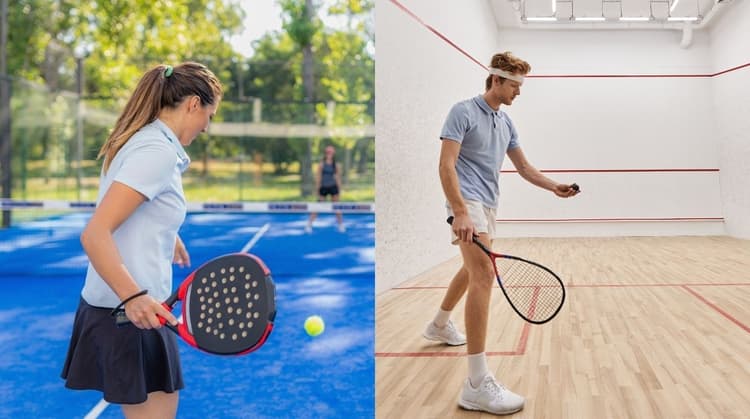
In tennis, the serve is a weapon. You toss overhead, drive up through the ball, and use pace, spin, and placement to pressure the returner. At stronger levels, the serve can win the point outright.
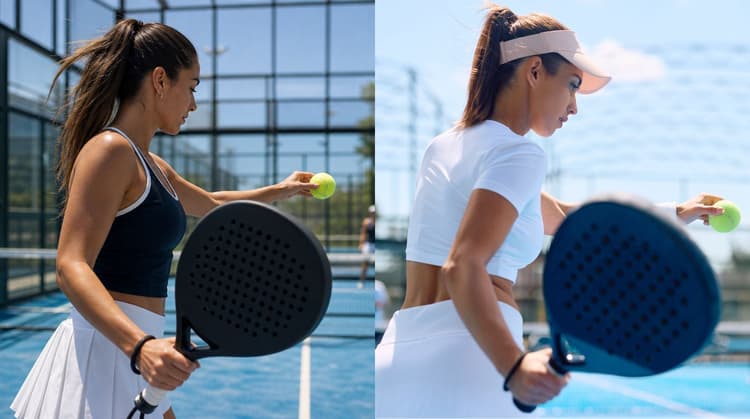
In padel, the serve starts the point. The server must bounce the ball, hit it underhand, contact it at or below waist height, and serve diagonally into the opposite service box. FIP rules also require at least 1 foot on the ground at contact.
That means no overhead motion, no jump serve, and very few aces. Tennis players often need to strip the serve down to a compact, controlled opener.
The serve starts rallies. In tennis, a good serve can immediately put you ahead. In padel, the serve mainly helps you move forward and begin the point from a better position.
Scoring: what stays the same and what changes
This is the easiest part for tennis players. Padel uses the same basic scoring language: 15, 30, 40, game. Sets are usually first to 6 games with a 2-game lead, and matches are commonly best of 3 sets.
The main difference is deuce. Recreational padel often uses golden point, a single deciding rally at 40-40. The receiving pair chooses which side receives, and the winner of that rally wins the game.
The 2026 FIP rules also list star point, a scoring option where deuce can move through advantage points before a deciding point. That matters more in formal competitions than casual club play.
| Padel | Tennis | |
| Points | 15, 30, 40, game | 15, 30, 40, game |
| At deuce | Golden point or other FIP-listed formats | Advantage usually required |
| Set | First to 6, win by 2 | First to 6, win by 2 |
| Tiebreak | First to 7, win by 2 | First to 7, win by 2 |
| Match | Usually best of 3 | Best of 3 recreational, best of 5 in some pro men’s events |
Wall rules: the defining difference in gameplay
During a padel rally, the ball must land in the opponent’s court before it touches any wall or fence. Bounce before glass. If your shot goes straight into the back glass, side glass, or mesh without bouncing first, you lose the point.
After the ball bounces, the glass becomes playable. The receiver can play it before the glass or wait for the rebound and hit it after. This is where tennis players feel uncomfortable early because their first instinct is to chase the ball before it reaches the wall.
You can also use your own back glass to send the ball over the net. That shot is legal, but it takes timing and body position. It is not the first shot a tennis player should copy from a highlight reel.
Out-of-court play is possible on courts built for it. If the ball bounces and leaves through the side opening or over the fence, a player can leave the court and return it. The FIP rules include safety-area requirements for authorized out-of-court play.
Power can backfire. A hard shot in tennis can finish the point. A hard shot in padel can rebound off the back glass and give your opponent a playable ball. Height, angle, and depth matter more than raw pace.
Format and social dynamic: standard padel is doubles
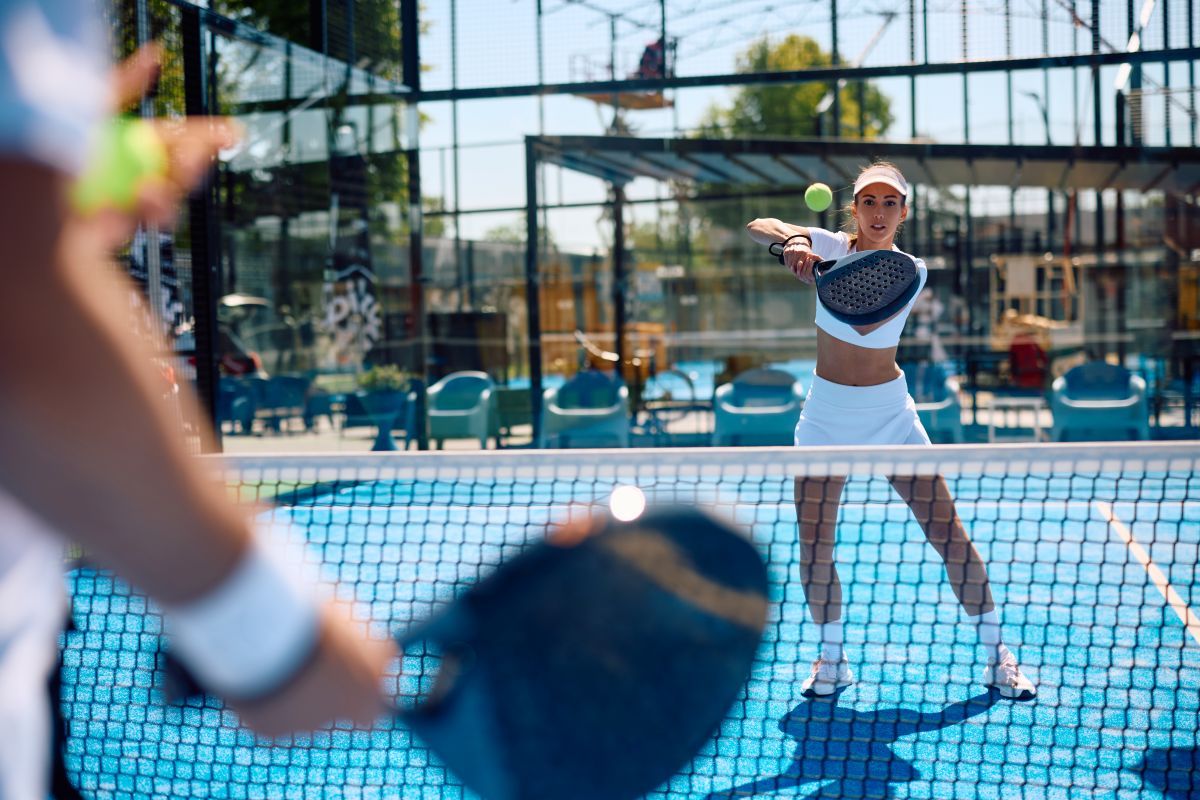
Standard padel is played as doubles. Tennis can be singles or doubles, which gives tennis players more format variety.
Doubles play changes the rhythm. Communication is constant. Partners call middle balls, shift together, and decide when to attack the net. Move as a pair. If one player attacks and the other stays back, the court opens up quickly.
Doubles tennis instincts help here. Covering the middle, closing the net, and calling balls all transfer. Singles tennis players usually need more time because padel forces shared decision-making every point.
For tennis players who want guided help with that transition, Bounce connects players with certified coaches and organized racket-sport sessions in their city.
Equipment differences: racket, ball, and shoes
Padel equipment looks close enough to tennis gear to be confusing. The racket and ball behave differently.
| Padel | Tennis | |
| Racket construction | Solid foam core, no strings | Strung frame |
| Racket surface | Perforated carbon or fiberglass | Natural gut or synthetic strings |
| Typical length | Up to 45.5cm under FIP rules | About 69cm for standard adult rackets |
| Typical weight | About 350-375g | About 280-340g |
| Ball behavior | Lower pressure and lower bounce | Higher pressure and livelier bounce |
| Shoes | Lateral support, often herringbone or omni sole | Court shoes matched to hard, clay, or grass surface |
The padel ball is close to a tennis ball in look and size, but it has lower internal pressure under FIP specifications. Lower bounce changes timing. You get more controllable rallies, but you also need to read the glass and play with shorter swings.
If you're gearing up before your first padel session, the padel equipment guide covers what to buy, what to rent, and what actually matters for a beginner.
Physical demands: how the workouts compare
Tennis singles usually demands more court coverage. You cover a wider space alone, sprint across larger angles, and generate more force through overhead serving and groundstrokes.
Padel doubles uses shorter movements, but the direction changes come often. You shuffle, split step, recover, and move with a partner inside a smaller court. The work feels more continuous and less explosive.
Padel is easier to start. That does not mean it is a light workout. It usually has lower peak impact than tennis singles, especially because the serve is underhand and the court is smaller.
Players who found tennis physically punishing often find padel more sustainable. The sport still trains cardio, balance, coordination, and lower-body strength. It just does it through repeated movement and positioning rather than long baseline sprints.
Bounce lists social and competitive play formats for players at different levels, from first-time sessions to organized match play.
Skills transfer: what tennis players keep and what they change
What transfers: footwork, split step timing, volley instincts, spin awareness, angle control, doubles communication, and basic scoring knowledge.
Those skills give tennis players a real head start. They usually understand ready position, contact point, and net pressure faster than a complete beginner.
What changes: the serve, swing length, power instinct, and patience. The overhead serve disappears. Long take-backs get punished. Full-speed groundstrokes often sit up off the glass.
The most useful adjustment is shortening the swing. Keep the take-back compact, especially near the glass and at the net. Padel gives you less time and less space to recover from a big tennis swing.
Control beats force. Tennis players who learn that early usually improve quickly. The ones who try to overpower the court spend their first few sessions watching the ball come back.
If you're a tennis player trying padel for the first time, the what is padel guide gives the full sport overview, and the guide to getting started in padel covers what to bring, where to find a court, and what your first session will actually feel like.
Is padel easier than tennis?
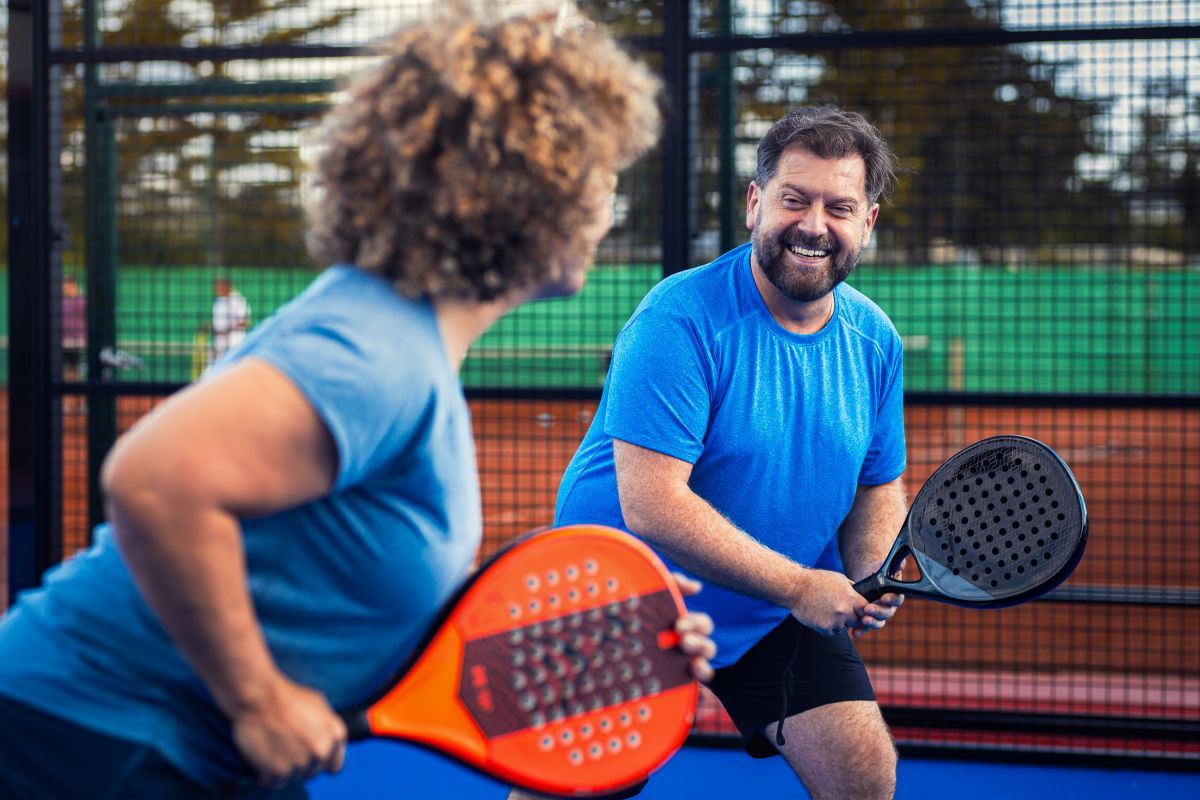
For beginners, yes. Padel is usually easier to start because the serve is underhand, the court is smaller, and the walls keep more balls in play.
Most new padel players can rally in their first session. In tennis, reliable rallies usually take longer because the serve, bounce, court size, and stroke timing are harder to coordinate at the start.
Mastery is still hard. Padel has a lower entry point, but the ceiling is high. Wall reads, partner movement, lobs, net control, and shot selection take years to sharpen.
For experienced tennis players, the serve is easier. The rest requires active adjustment. Padel is generous to beginners but honest with players who rely too much on pace.
Conclusion: same score, different sport
Padel and tennis share scoring, net vocabulary, and plenty of racket-sport instincts. The actual play feels different because the court changes the job.
Padel is smaller, enclosed, underhand-served, usually doubles, and built around rebounds. Tennis is more open, serve-driven, and flexible across singles and doubles.
Tennis players bring useful skills into padel. They also bring habits that need sanding down: long swings, hard drives, and the belief that a ball past the baseline is finished.
For tennis players curious about padel, or players ready to try both, Bounce connects you with certified coaches and organized play in your city.
FAQs
Is padel easier to learn than tennis?
Yes, padel is usually easier for beginners. The underhand serve is simpler, the court is smaller, and the walls keep rallies alive. Tennis has a steeper learning curve because the overhead serve and larger court demand more technical control early.
Can tennis players play padel without lessons?
Yes. Tennis players can usually rally in padel quickly because footwork, split steps, volleys, and scoring knowledge transfer. A beginner clinic still helps because wall play and compact swings are not automatic tennis skills.
How is the padel court different from a tennis court?
A padel court is 20m x 10m and enclosed by glass walls and mesh. A tennis doubles court is 23.77m x 10.97m and open. The enclosure is the biggest playing difference because the ball can rebound off the glass after it bounces.
Why does padel not have an overhead serve?
Padel uses an underhand serve after a bounce. That keeps the serve from dominating the sport and makes rallies start more consistently. The rally, net position, and wall play decide most points.
Is the scoring in padel the same as tennis?
The basic scoring language is the same: 15, 30, 40, game, sets, and tiebreaks. The main difference is deuce. Recreational padel often uses golden point, while tennis usually uses advantage scoring.
Can you play padel singles?
Standard padel is doubles. Some venues have singles courts, but the main game, official court design, and most competitions are built around 2 vs 2 play.
What skills from tennis help the most in padel?
Footwork, split step timing, volley technique, doubles communication, and scoring knowledge all carry over
directly. The habits that need the most adjustment are the overhead serve, long groundstroke swings, and the instinct to overpower the ball.
How long does it take a tennis player to get comfortable in padel?
Most tennis players can rally and understand basic point structure in the first session. Wall reads and compact
swings usually take 3 to 5 sessions to feel natural. Net positioning and partner movement improve with regular doubles play over a few weeks.