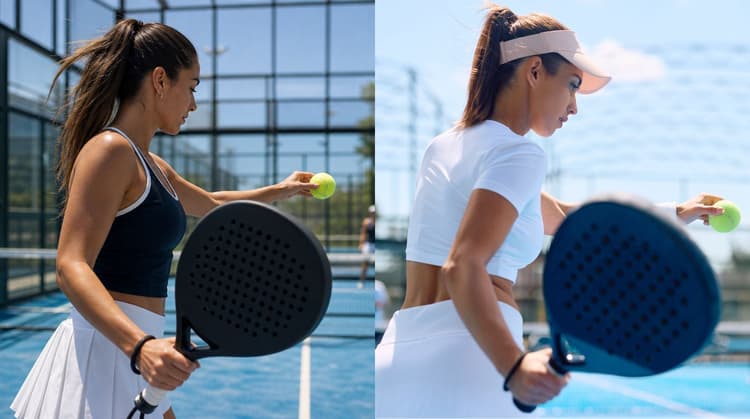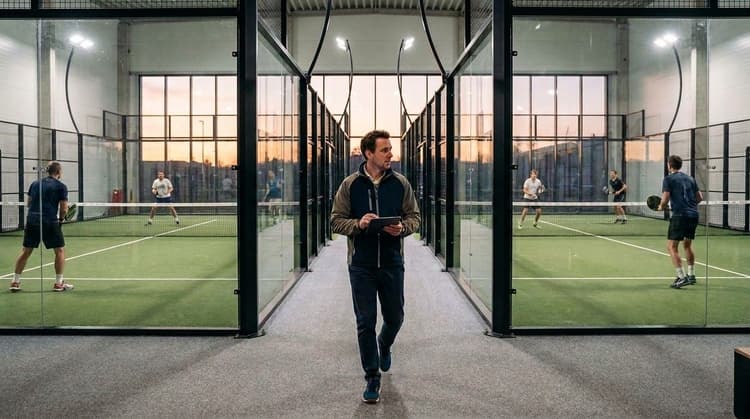
Four players step onto a glass-walled court that looks like a smaller tennis court. The rackets are solid, the serve is underhand, and the ball can hit the back glass, come back out, and stay alive.
That is the quick visual answer to what is padel: a doubles racket sport built around control, rebounds, and social play. It is easier to start than tennis because the court is smaller and the ball stays in play longer, but the walls add a layer that takes a few sessions to read.
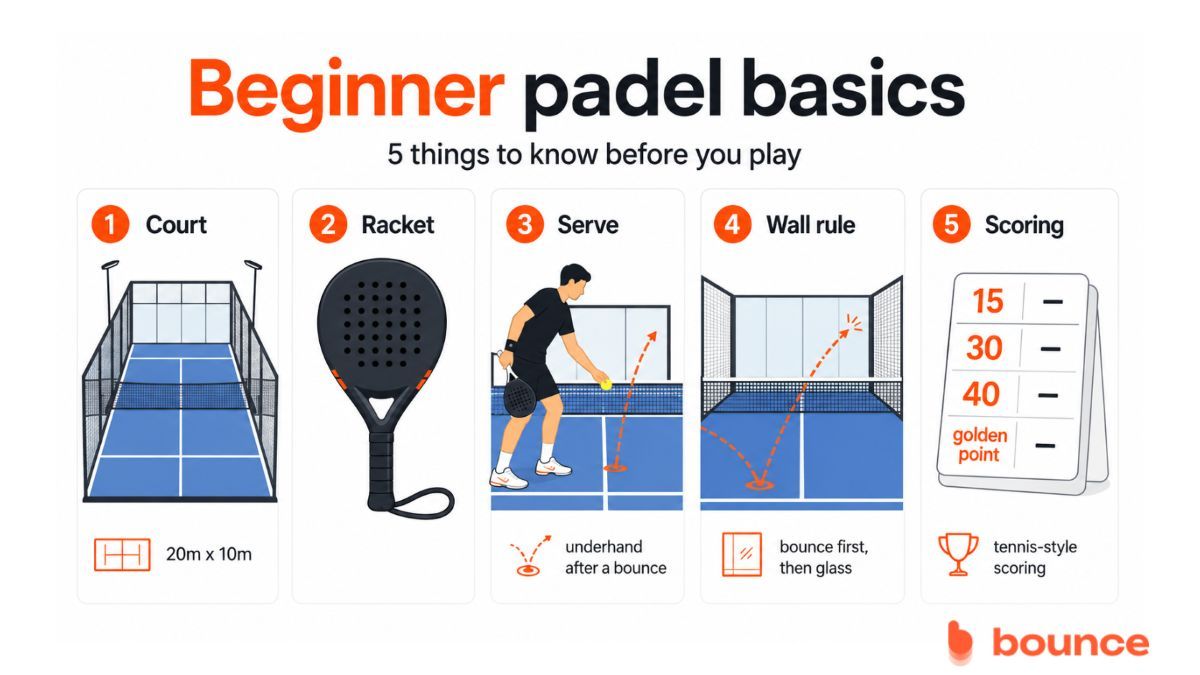
Quick answer: Padel is a doubles racket sport played on a 20m x 10m enclosed court with glass walls. You use a solid, stringless racket, score like tennis, and the ball can rebound off the walls during a rally. It is easy to pick up, almost always played socially, and one of the fastest-growing racket sports in the world.
What padel is: the one-paragraph definition
Padel is a 2 vs. 2 doubles racket sport played on an enclosed 20m x 10m court surrounded by glass back walls and mesh side fencing. Players use a solid perforated racket with no strings and a slightly lower-pressure ball than a tennis ball.
Scoring follows tennis: 15, 30, 40, game, sets, and often golden point at deuce. The signature rule is simple: once the ball bounces in the court, it can rebound off the glass and stay in play. Padel is sometimes called padel tennis, but the correct name is padel, and it can be traced back to Enrique Corcuera’s 20m x 10m walled court in Acapulco in 1969.
For the full story of how padel went from one court in Mexico to 35 million players worldwide, the padel origin guide covers the sport's spread decade by decade.
The court: what you're looking at
A padel court is 20m long and 10m wide. That is about 25% smaller than a doubles tennis court, which is one reason rallies start faster and players stay closer to the action.
A net divides the court in half. The official height is 0.88m at the center and up to 0.92m at the sides, according to FIP’s rules documents.
The back walls are glass. The side sections use a mix of glass panels and metallic mesh. Those walls are live after the ball bounces, which is the detail that makes padel feel different from open-court sports.
Many courts have openings or doors on both sides. At higher levels, players can run outside the court to return a ball that bounced in and left through the opening. It looks chaotic the first time you see it. It is legal when the court setup allows it.
The surface is usually artificial turf or a hard painted surface. The smaller court, live glass, and enclosed shape keep the ball in play longer than a standard tennis rally.
The equipment
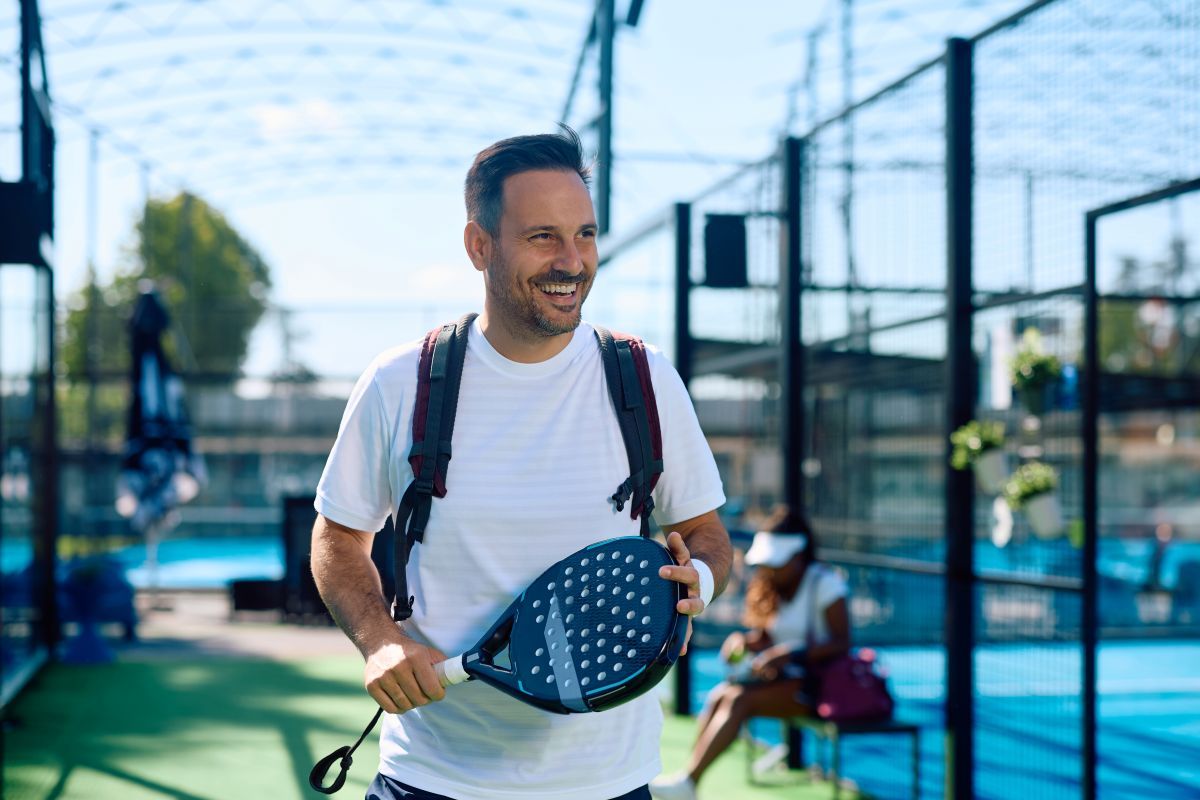
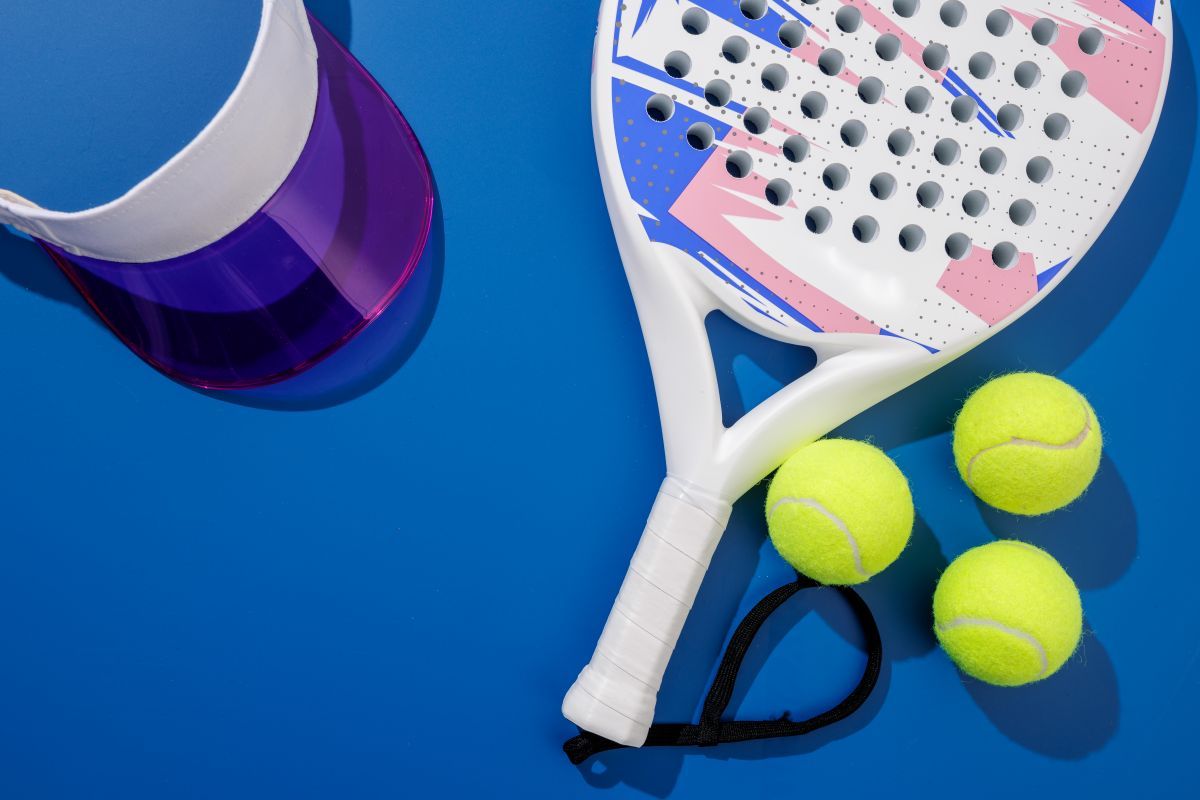
A padel racket has a solid foam core, usually EVA, with a fiberglass or carbon fiber surface and cylindrical holes through the face. It has no strings. It is shorter and thicker than a tennis racket, and the wrist strap is required during play.
Most rackets weigh around 350–375g. Round rackets give beginners the easiest sweet spot. Teardrop and diamond shapes usually add power but punish off-center contact more quickly.
The ball looks close to a tennis ball, but it is slightly lower pressure. That lower rebound gives players more time, extends rallies, and rewards placement over raw pace.
The pressure difference matters more than it sounds. The padel ball vs tennis ball breakdown explains exactly how the two balls differ and why it changes how the game feels.
Shoes matter more than most first-timers think. Padel requires lateral movement on turf, so court shoes with lateral support and a herringbone or omni sole are safer than running shoes.
How the game works
A padel point starts with an underhand serve. The server bounces the ball, strikes it at or below waist height, and sends it diagonally into the opponent’s service box. The server gets 2 attempts.
After the serve, both teams rally over the net. Each shot must land in the opponent’s court before it touches their glass or fence. If your shot hits the opponent’s wall first, the point is over.
Once the ball has bounced, the walls become part of the rally. You can let the ball bounce, come off your back glass, and then hit it. You can also use your own glass on purpose, sending the ball into the wall so it rebounds over the net.
Scoring follows tennis: 15, 30, 40, game. At 40-40, many recreational and tournament formats use golden point, where one rally decides the game. FIP lists the official rules and competition documents on its official Rules of Padel page.
For a full breakdown of faults, service lets, wall scenarios, and scoring formats, the padel rules guide goes into every situation you'll run into once play gets serious. The wall rule matters most: the ball must bounce first before the opponent's wall or fence becomes playable.
| Part of the point | What happens | Beginner mistake to avoid |
| Serve | Bounce, hit underhand, serve diagonally | Serving overhead or above the waist |
| Rally | Ball must land in the opponent’s court first | Hitting straight into the glass |
| Wall play | Glass is playable after the bounce | Running away from every rebound |
| Scoring | 15, 30, 40, game | Forgetting golden point at deuce |
How padel compares to other sports
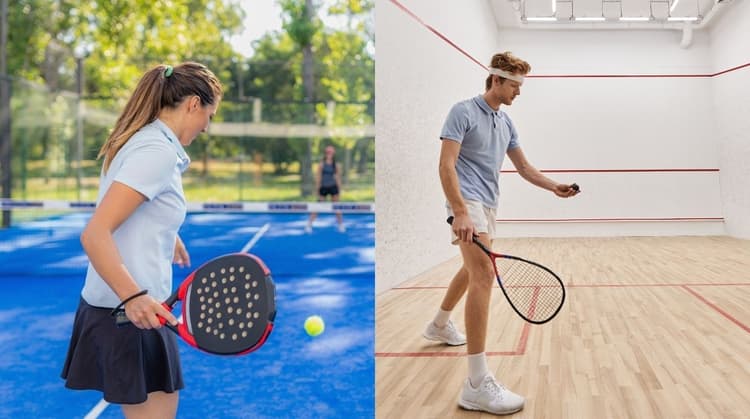
Most people understand padel faster when they compare it with a sport they already know. Tennis players recognize the scoring. Squash players understand rebounds. Pickleball players recognize the social doubles rhythm.
Padel and tennis share scoring language, but the court changes everything. Padel uses an underhand serve, solid racket, enclosed walls, and doubles-first positioning. Tennis footwork helps, but tennis serving habits do not transfer cleanly.
The full breakdown of how the two sports differ, from court dimensions to scoring and strategy, is in the padel vs tennis comparison.
Padel and squash both use walls, but differently. In squash, the front wall is the main target. In padel, the ball has to land in the court first, then the glass can extend the rally.
Padel and pickleball are both social, doubles-friendly racket sports. The big split is the court. Pickleball has an open court and a non-volley zone. Padel has glass walls, no kitchen, and tennis-style scoring.
| Padel | Tennis | Squash | Pickleball | |
| Court | 20m x 10m enclosed | 23.77m x 10.97m open | 9.75m x 6.4m enclosed | 13.41m x 6.1m open |
| Walls | Back and side walls | No | All 4 walls | No |
| Format | Usually doubles | Singles or doubles | Singles or doubles | Singles or doubles |
| Serve | Underhand after bounce | Overhead | Into front wall | Underhand |
| Scoring | Tennis-style | Tennis-style | Points to 11 or 15 | Usually to 11 |
| Racket | Solid, perforated | Strung | Strung | Solid paddle |
Why padel is growing so fast
Padel spreads because it gives new players a real rally quickly. The court is smaller than tennis, the ball is slower, and doubles makes the skill gap less brutal. A stronger partner can cover space while a beginner learns the angles.
The walls help too. They keep the ball alive, which gives people more touches in the first session. A sport that gives beginners early rallies has a better chance of turning one booking into a habit.
The venue experience also matters. Padel clubs often build around social formats, open sessions, and court-side gathering spaces. The sport is easy to organize around 4 people, which makes it naturally social.
The numbers explain why the sport keeps appearing in new cities. The FIP World Padel Report 2025 reported more than 35 million active players, more than 77,300 courts worldwide, and court growth across 150 nations and 20 dependent territories.
That growth is visible in North America too. Padel is still far behind tennis and pickleball in court access, but the supply is growing fast enough that more recreational players are now seeing courts at tennis clubs, fitness centers, and dedicated padel venues.
Bounce is part of that access story, connecting players with coaches, clubs, and organized play in cities across North America. For a sport that depends on partners and court availability, discovery matters almost as much as instruction.
What it actually feels like to play
Most beginners can rally in the first session. The underhand serve lowers the entry barrier, and the enclosed court forgives shots that would be gone forever in tennis.
The walls feel strange for 2–3 sessions. The ball comes off the glass later than your brain expects, then suddenly the game slows down. You start waiting instead of lunging.
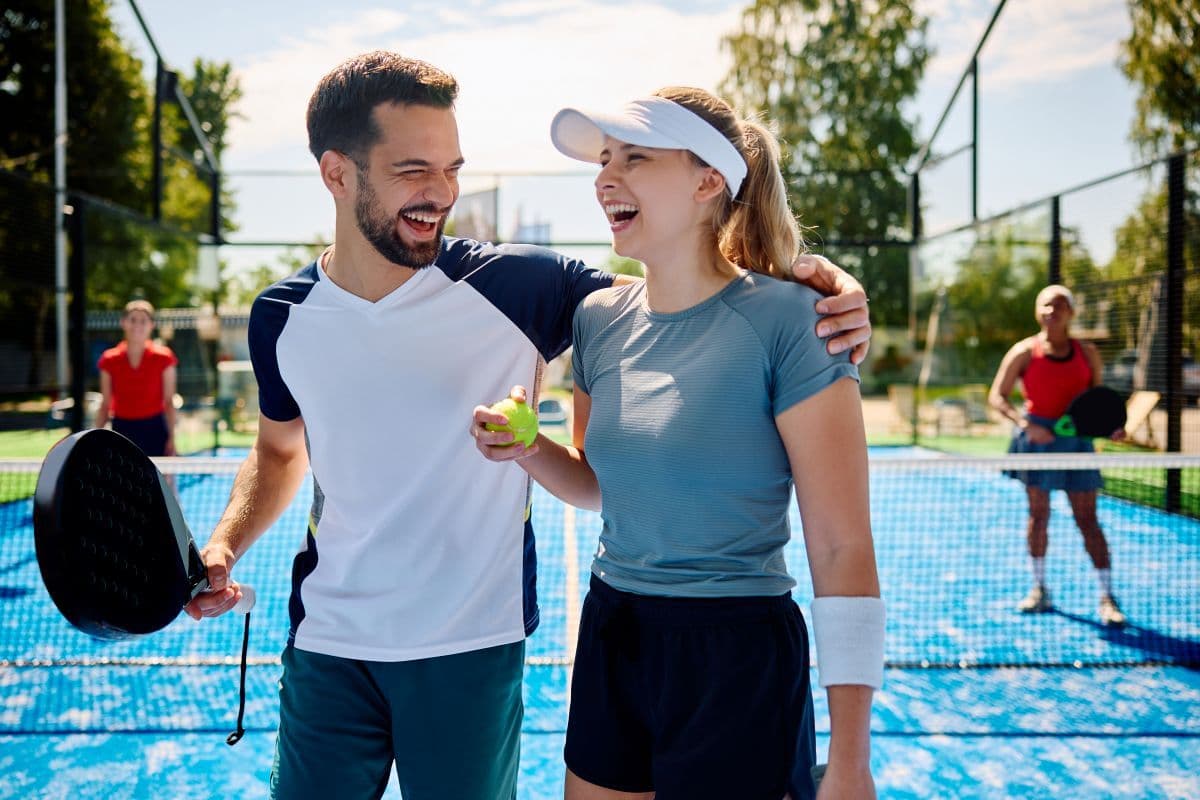
The social part is immediate. Four people on a compact court creates conversation, score confusion, laughter, and short tactical debates after almost every long rally.
Physically, padel sits between pickleball and tennis for most recreational players. More movement than pickleball, but less open-court sprinting than tennis. It rewards placement, patience, and reading position more than power.
For players who want a structured first experience, the guide to getting started in padel covers finding a court, what to bring, which session types work for beginners, and what the first 3 months should feel like.
What makes padel different
Conclusion
Padel is a doubles racket sport played on a compact glass-walled court. It scores like tennis, uses an underhand serve, and turns the walls into part of the rally after the ball bounces.
That mix explains the appeal. Beginners get rallies quickly. Better players still have plenty to solve because the glass changes angles, timing, and positioning.
For players ready to try padel, whether that means finding a court, booking a first lesson, or joining an organized session, Bounce connects you with coaches, courts, and formats in your city.
FAQs
Is padel the same as padel tennis?
Padel is sometimes called padel tennis, but padel is the correct name. It is a distinct racket sport with its own rules, court, equipment, and international governing body.
Is padel hard to learn for beginners?
Padel is easier to start than tennis for most beginners because the serve is underhand, the court is smaller, and the ball stays in play longer. The walls are the main adjustment. Most new players need 2–3 sessions before rebounds feel natural.
Why is padel so popular right now?
Padel is popular because beginners can rally quickly, the doubles format feels social, and clubs can run structured open sessions around 4 players. The smaller court and live walls make the game active without demanding the same open-court running as tennis.
How is padel different from tennis?
Padel uses a smaller enclosed court, glass walls, a solid racket, and an underhand serve. Tennis uses a larger open court, strung rackets, and an overhead serve. The scoring is similar, but the rally patterns are completely different because of the walls.
Can you play padel singles?
Standard padel is played as doubles. Some venues have singles courts, but official and recreational padel is built around 2 vs. 2 play.
Where can I play padel near me?
Start with local tennis clubs, fitness clubs, and dedicated padel centers. In the U.S., the USPA Where to Play directory is a useful non-commercial starting point for finding listed padel venues.