Most recreational players hit too flat. Returns sit up. Third shots hang at waist height. Dinks bounce high enough for an opponent to lean in and speed the ball up.
The slice gives you a lower ball. A good slice makes the ball skid after the bounce, forces opponents to lift from below net height, and buys you time to move into better court position.
Want a quick answer? A slice in pickleball is a shot hit with backspin. The paddle travels from high to low with a slightly open face, brushing the upper half of the ball so it stays lower after the bounce. The key pieces are a continental grip, a controlled swing path, and contact slightly in front of your body.
This guide covers the mechanics for forehand and backhand slice, the game situations where it works, the shots where it gets you in trouble, and drills that give you actual targets.
What a slice does to the ball
Backspin means the ball rotates backward relative to the direction it is traveling. In the air, that spin can create a lift force, which is part of the Magnus effect. On the bounce, the spin and court friction help the ball skid forward instead of jumping up.
That matters because low contact changes the next shot. A ball struck from shoe level has to be lifted. Lifted balls give you attackable volleys, easier dinks, or time to close the kitchen line.
Spin depends on technique first. Paddle surface still matters. Tennis Warehouse University testing on pickleball spin measured how paddle-ball friction affects rebound spin, and that is why textured surfaces can help players who already brush the ball cleanly.
For the broader spin picture, pickleball spin explains topspin, backspin, sidespin, and why paddle angle changes ball flight.
How to slice a pickleball in 6 steps
Use this as the clean HowTo version. Then use the sections below to troubleshoot the details.
- Start with a continental grip so the paddle face can open naturally on both forehand and backhand slices.
- Set your grip pressure at 4 or 5 out of 10. The paddle has to stay stable without locking your hand.
- Begin with the paddle above the ball and slightly outside the contact line.
- Swing down and slightly forward, brushing the upper half of the ball.
- Keep the paddle face open about 30 to 35 degrees from vertical.
- Finish below waist height with the paddle moving toward your target.
The motion should feel smooth. A hard chop sends the ball into the net or floats it because the paddle path loses its forward piece.
The grip: start with continental
Use the continental grip. Hold the paddle like a hammer. Your index knuckle sits near the top bevel, which lets you move between forehand and backhand slices without changing grips in the middle of a rally.
Grip pressure matters more than most players think. Use 4 to 5 out of 10. Tight hands kill the brushing motion, and a dead brush produces a flat ball that sits up.
If your slice keeps coming off the face with no spin, check your hand before you check your paddle. Most players squeeze when they get nervous.
The swing path: brush down and forward
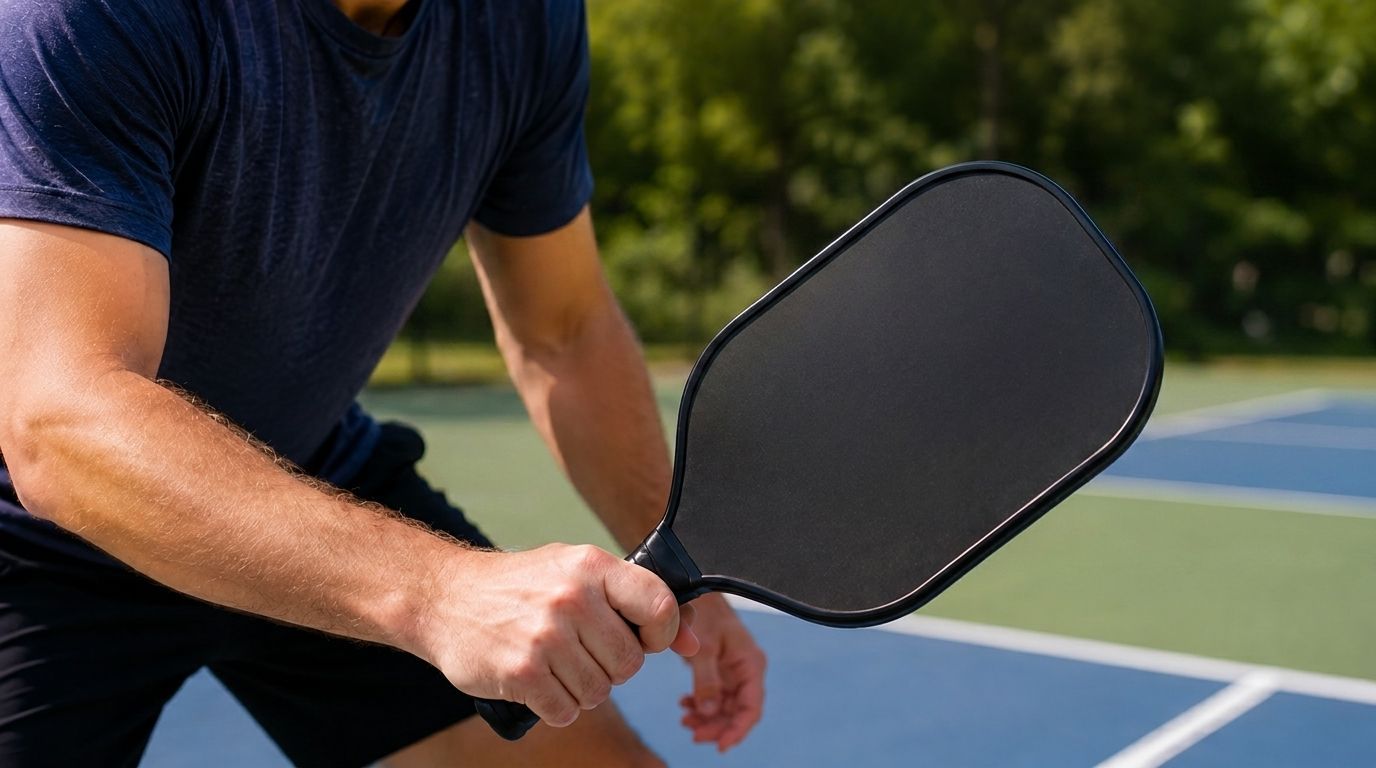
Start the paddle above the contact point. Then move down and slightly forward through the ball. The word slightly matters.
A pure downward chop drives the ball into the tape. A forward-only swing hits through the ball and removes the spin. The slice lives between those two misses.
Think of shaving the back of the ball. Smooth pressure. Clean contact. Short finish.
The paddle angle: open enough to spin, closed enough to stay low
The paddle face should be open about 30 to 35 degrees from vertical for most slice shots. That gives the ball enough backspin without sending it high.
A face closer to 45 degrees can work on some defensive resets, but it becomes risky fast. Once the face gets too open, the ball floats. Your opponent gets a shoulder-height ball and the point usually ends badly.
A closed face creates the other miss. The ball dives because you are hitting down without enough spin to carry it.
The contact point: in front, above the middle of the ball
Make contact slightly in front of your body. Late contact makes the paddle face change at the last second, especially on the backhand side.
Brush the upper half of the ball. You are creating backspin by moving down across the back of it. Contact through the middle turns the shot flat. Contact too low turns into a scoop.
Bend your knees on low balls. Opening the paddle face to rescue a low ball usually floats it. Get your body lower so the same swing path can work.
Forehand slice and backhand slice use different body cues
Forehand slice
The forehand slice uses more body turn. Your shoulders and hips rotate together as the paddle moves forward and down. Start slightly outside your hip, then cut through the ball with a compact finish.
Use it on a return of serve, a wide ball on your forehand side, or a controlled reset where you need the ball to stay low after the bounce.
Backhand slice
The backhand slice is usually the more useful version in pickleball. Many dinks, drops, and resets happen on the backhand side because players protect the middle with that paddle position.
Drive the motion with your shoulder. Keep the wrist quiet. A wristy backhand slice sprays the ball left, right, long, or into the net because the paddle face changes too late.
Keep the swing small. More backswing adds timing problems. The best backhand slice feels compact and boring, which is exactly why it holds up under pressure.
When to use the slice in actual games
The slice is useful when it changes the opponent’s contact point. Use it to make them hit up, slow the rally down, or give yourself time to move.
Return of serve
A slice return can stay low and buy time for your move to the kitchen line. Aim deep, about 3 to 4 feet inside the baseline. That depth keeps the serving team from stepping in and driving an easy third shot.
Mix it with flat returns. A slice return loses bite once opponents expect it every time.
Third shot drop
The slice third shot drop is harder than a basic push drop, but it gives you a ball that dies lower after the bounce. If you are still building the standard version, study the mechanics of the pickleball drop shot first, then layer in backspin.
Hit the slice drop softer than you think. Backspin already helps the ball slow down. Extra pace sends it long.
Dinking exchanges
Slice dinks keep the ball low at the non-volley zone. The backhand slice dink is especially useful because many players attack better from height than from below the tape.
Do not slice every dink. Give opponents the same spin 6 balls in a row and they will time it. Mix in a flat push dink or a topspin roll when the ball sits high enough.
Defensive resets
A defensive slice can buy you time when you are stretched wide or absorbing pace. The goal is neutral. Get the ball back low, recover your feet, and reset the point.
Doubles patterns
A crosscourt slice can move one opponent wide and create a gap through the middle. That is useful only if your partner moves with you. Good pickleball doubles strategy depends on shape, spacing, and communication.
Slice decision table: use it or choose a safer shot
| Situation | Use the slice when | Choose another shot when |
| Return of serve | You can drive the ball deep and low while moving forward. | Your opponent already reads the spin early. |
| Third shot drop | You have time, balance, and contact in front. | You are late, rushed, or falling backward. |
| Dink exchange | The ball is at knee height or higher and you can brush cleanly. | The ball is already low and close to the net tape. |
| Defensive reset | You need time to recover and can keep the paddle face controlled. | You are stretched so far that the paddle angle breaks down. |
| Attackable ball | Rarely. Use it only as a changeup into space. | The ball is above net height and you can roll or punch it. |
Shots where the slice gets you in trouble
The slice has limits. Use it in the wrong spot and you give away the point.
Low skidding balls are the first problem. The ball is already low. Trying to slice it from below knee height usually sends it into the net. Use a soft push or a controlled lift instead.
Off-balance contact is the second problem. The slice needs a steady paddle face. If you are lunging sideways, keep the shot simple and make the next ball.
Pressure points are the third problem. A slice third shot drop has to be practiced before it appears at 9-9. Use the shot you own.
Some opponents handle backspin well. If they step in early and drive your low ball anyway, change the pattern. Go deeper, go flatter, or use topspin.
Common slice mistakes and quick fixes
Wrist flick on the backhand
What happens: the ball sprays. It goes left, right, long, or into the net.
Fix: quiet the wrist before the swing. Drive the motion from the shoulder and keep the follow-through short. Hit 20 wall reps where the paddle face stays stable from start to finish.
Chopping instead of brushing
What happens: the ball clips the tape or dies before it crosses the net.
Fix: slow the swing down and add a small forward piece. Stand 6 feet from a wall. If the ball hits the floor before the wall, your swing is too steep.
Grip pressure too tight
What happens: the ball comes off flat with no skid after the bounce.
Fix: hit 10 slices at 4 out of 10 grip pressure, then 10 at 7 out of 10. You should feel the difference immediately. The looser set should brush cleaner.
Paddle face too open
What happens: the ball floats and sits up.
Fix: close the face to 30 to 35 degrees from vertical. Keep the ball low by changing your body height. Avoid scooping with the paddle.
Using slice as a full-time rally pattern
What happens: opponents time the spin and attack it earlier.
Fix: track your next practice game. If more than half your returns or dinks are sliced, add flat balls and topspin rolls. A predictable slice becomes a slow ball with a label on it.
Drills that build a reliable slice
Drill 1: wall brush drill
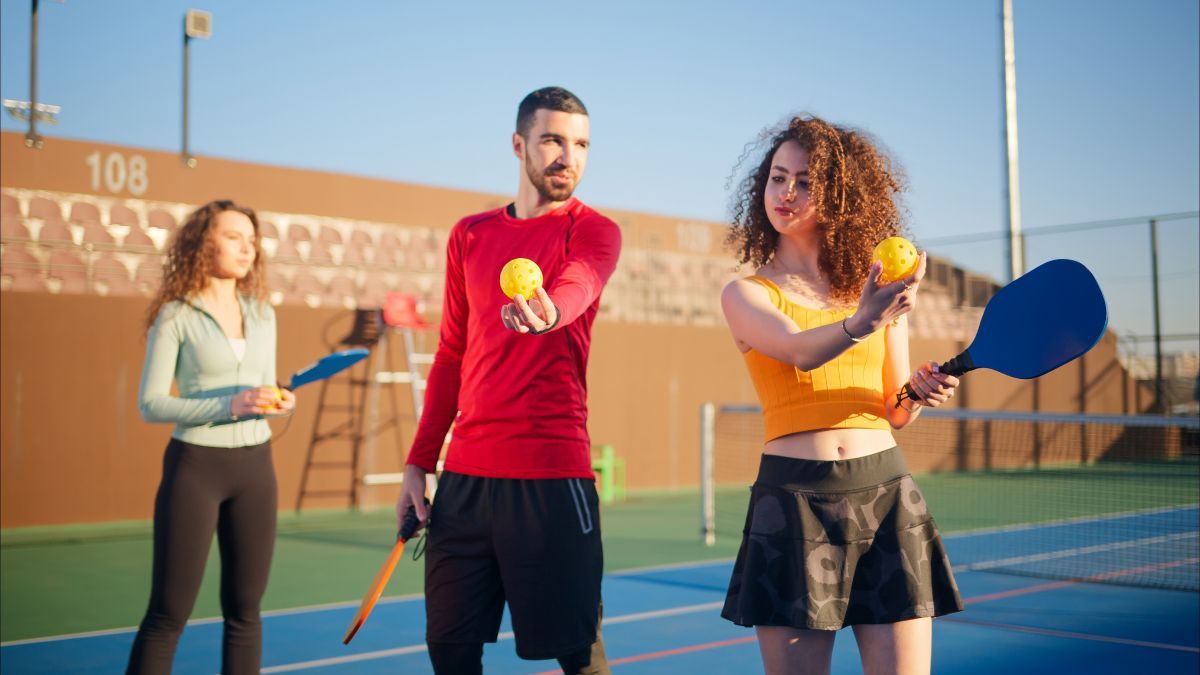
Stand 6 feet from a wall. Drop the ball, let it bounce once, then slice it into the wall. The ball should hit the wall before it hits the floor.
Target: 20 consecutive reps.
Progression: move back to 10 feet and aim at a tape target on the wall.
Schedule: 10 minutes, 3 times per week.
Drill 2: slice-only dink rally
Both players stand at the kitchen line and use only slice dinks.
Target: 15 consecutive exchanges that stay inside the kitchen.
Progression: one player uses slice while the other mixes flat and topspin dinks. Switch roles after 5 minutes.
Drill 3: third shot slice drop
Your partner stands at the kitchen line. You start at the baseline. Hit 10 forehand slice drops, then 10 backhand slice drops.
Target: 7 of 10 land in the kitchen without sitting up. If your partner has to lift the ball, the drop worked. If they can drive it hard, the ball was too high or too fast.
Schedule: 15 minutes, 2 times per week.
Drill 4: return-of-serve slice
Your partner serves. You return with a slice and aim 3 to 4 feet inside the baseline.
Target: 8 of 10 returns land deep and stay low enough to make the server hit up.
Progression: add variety. Slice 3 returns, then hit 1 flat return. The goal is control with pattern change.
If you want a coach to clean up the grip and contact point, Bounce lessons let you search for pickleball coaches by city, sport, and skill level. That is useful when the issue is mechanical and 15 minutes of trained feedback can save you weeks of guessing.
How paddle surface affects slice
Technique is the biggest variable. A player with a clean brush can create backspin with an average paddle. A player who chops the ball will still chop it with an expensive textured face.
Paddle surface does play a role once the motion is sound. Pickleball Science explains why surface roughness and kinetic coefficient of friction matter enough that USA Pickleball tests and limits them in equipment standards.
So use the right order. Fix grip, path, angle, and contact first. Then care about paddle face texture.
How to practice slice without turning it into a bad habit
Practice slice in blocks, then force yourself to make choices. A player who slices every ball in practice usually slices every ball in games.
Use this 25-minute session:
- 5 minutes: wall brush drill from 6 feet.
- 5 minutes: wall brush drill from 10 feet with a tape target.
- 5 minutes: slice-only dink rally.
- 5 minutes: slice and flat dink alternating.
- 5 minutes: return practice with 3 slice returns and 1 flat return.
Build the slice before you trust it
The slice is a setup shot. It keeps the ball low, slows the next contact, and gives you time to get to better court position.
Start with the wall. Then add partner drills. Then use it in open play when the score pressure is low. That order matters because the slice needs clean mechanics before it can survive a real point.
For players building their game through structured coaching and organized play, Bounce connects you with certified coaches, clinics, open play, and competitive formats in your city.
FAQ
What is a slice in pickleball?
A slice in pickleball is a shot hit with backspin. The paddle moves from high to low with a slightly open face, brushing the upper half of the ball. A good slice stays low after the bounce and makes the opponent lift the next shot.
What grip do you use for a pickleball slice?
Use a continental grip for most slice shots. It lets you keep the paddle face slightly open on both forehand and backhand slices without changing grips during a fast exchange.
What is the difference between a slice and a drop shot in pickleball?
A slice describes spin. A drop shot describes placement and trajectory. A slice drop is a drop shot hit with backspin, but you can also slice a return, dink, or defensive reset.
Can you slice a serve in pickleball?
Yes, but serve rules limit what the motion can look like. The 2026 USA Pickleball rulebook says a volley serve must have a clear upward arc, contact below the waist, and the paddle head below the wrist at contact. A drop serve gives players more freedom because the ball bounces before contact, but the serve still has to be legal under the official rules.
Is slice better than topspin in pickleball?
Slice is better for low resets, soft drops, and balls where you want the opponent to lift. Topspin is better for rolls, drives, and attacking balls above net height. Good players use both because spin variety changes timing.
Why does my slice keep floating too high?
Your paddle face is probably too open, or your swing is turning into a scoop. Bring the face closer to 30 to 35 degrees from vertical and keep the follow-through below your waist. Also check grip pressure. A tight hand makes the ball come off flatter than you think.
How long does it take to develop a reliable slice?
Most players can feel the basic motion in 3 to 4 weeks with focused practice 2 or 3 times per week. A slice that holds up during games usually takes 6 to 8 weeks because timing, footwork, and shot choice all have to catch up.
Does paddle surface affect the slice?
Yes, but it comes after technique. A textured face can help create spin because it increases paddle-ball grip at contact. Clean swing path, paddle angle, and contact point matter more than the paddle for most recreational players.