In May 2026, Apollo Sports Capital led a $225 million investment in Pickleball Inc., the parent company of the PPA Tour and Major League Pickleball. That is the kind of move investors make when a sport has already proved it can hold attention, sell programming, and build a business around repeat play.
Pickleball has been the fastest-growing sport in America for 5 straight years, according to the 2026 SFIA Topline Participation Report. The 2026 story is less about discovery and more about pressure: courts, coaching supply, pro media, health research, facility design, and global organization all trying to catch up at once.
Quick Answer
Want the short version? Pickleball is moving from breakout growth to organized scale. The sport now has 24.3 million U.S. players, major institutional capital, stronger health research, and formal activity in more than 60 countries.
The useful read is practical. More players mean more court pressure. Younger players mean faster programming cycles. More investment means the pro game, equipment market, and facility model will get more serious. The winners will be the coaches, clubs, and organizers who turn raw demand into better local play.
Pickleball trends at a glance
| Trend | What the data says | What it means on court |
| Participation | 24.3 million U.S. players in 2025 | The sport is past novelty and into retention. |
| Demographics | 25 to 34 is the largest age cohort | Programming has to fit working-age adults and younger players. |
| Investment | $225 million into Pickleball Inc. | Pro pickleball is being packaged as media, events, retail, and technology. |
| Courts | 25,000 new courts needed | Access is becoming the main local constraint. |
| Health research | 68+ MVPA minutes per session | The sport has a stronger wellness case than it had 5 years ago. |
| Global growth | 60+ countries with active federations | Governance and coaching standards matter more outside North America. |
Trend 1: Participation crossed 24 million, and the growth is maturing
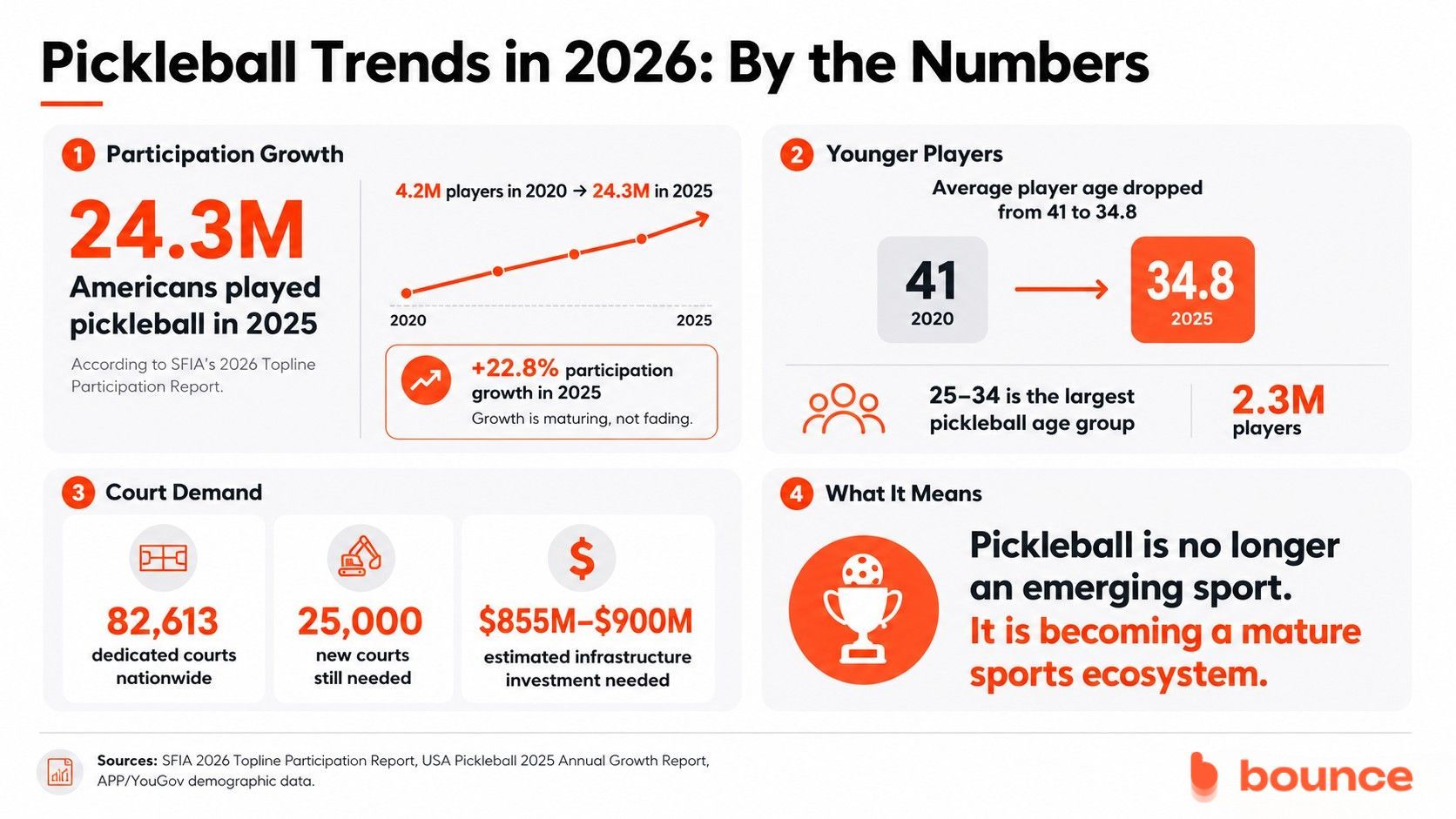
According to SFIA, 24.3 million Americans played pickleball in 2025. That is up from 4.2 million in 2020 and puts pickleball among the country’s most-played sports.
The bigger number is the 3-year curve. SFIA reports 171.8% participation growth from 2022 to 2025. In 2025 alone, the sport added roughly 4.5 million players.
The read is simple: the wild early spike is settling into a more mature phase. That is normal. Sports cannot keep doubling forever. Once a sport reaches tens of millions of players, the real question becomes whether clubs, leagues, coaches, and courts can keep people playing after the first few sessions.
For operators and coaches, that means beginner demand is still real, but the next layer matters more: skill groups, recurring ladders, cleaner lesson paths, and formats that give newer players a clear place to fit.
Trend 2: The average player is younger than the old reputation
Pickleball’s retirement-community label is running behind the actual player base. SFIA’s state-of-the-sport data found that the 25 to 34 age group had the most participants, at 2.3 million players. The sport also added more than 1 million children under 18 from 2022 to 2023.
That changes the product. A 28-year-old entering a Tuesday night league is usually looking for different pacing, communication, and social context than a 62-year-old joining morning open play. Both matter. Treating them like the same customer is how programs get bland.
The shift also explains why indoor social venues are getting more attention. Younger adult players want consistent start times, cleaner matchmaking, food and drink nearby, and enough structure that the night feels worth booking.
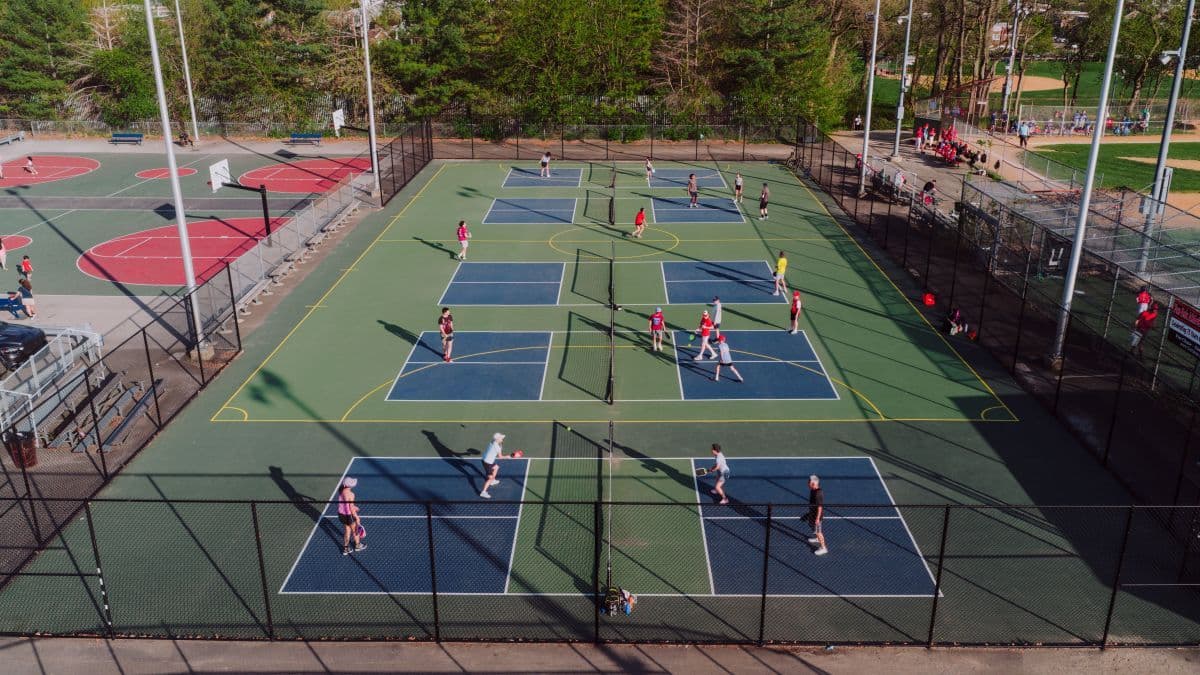
For players comparing pickleball to tennis, the smaller court and faster learning curve help explain why it spreads quickly. The court-size differences are easier to see when you compare a pickleball court next to a tennis court.
Trend 3: Institutional money is moving into the full ecosystem
The biggest signal came from Apollo Sports Capital. Its $225 million structured investment created Pickleball Inc. as the parent company of the PPA Tour and Major League Pickleball. The announcement tied the deal to leagues, media, technology, events, and consumer products.
The company said the newly combined business verticals generated more than $140 million in 2025 revenue, with PPA Tour athletes earning more than $33 million annually in prize money and payouts. PPA also reported a 791,000-viewer CBS average for a January 2026 broadcast.
The second signal is equipment. Bluestone Equity Partners put $30 million into Selkirk Sport in January 2026, according to the source list for this article. Money is going into pro media and into the paddle category. That tells you investors see more than court rentals. They see a whole participation economy.
For coaches, this creates a more serious advisory role. Players are going to ask which paddle, league, rating path, and training format makes sense. The better answer comes from watching how they actually play, not from reading a product page.
As the paddle market grows, buying decisions are getting harder. Counterfeit paddles from online marketplaces have become a documented problem, and reputable sourcing now matters more for players, coaches, and clubs recommending equipment. A bigger equipment market does not automatically make the category easier to navigate.
If you are trying to move from casual games into a cleaner development path, Bounce helps players find coaches, lessons, and organized play near them. For coaches, that local discovery layer matters more as the equipment and programming market gets louder.
Trend 4: Courts are becoming the hard constraint
USA Pickleball’s 2025 Annual Growth Report lists 18,258 court locations and 82,613 known courts nationwide. That sounds large until you compare it with 24.3 million players.
SFIA’s infrastructure research estimated the sport needs 25,000 new dedicated courts and roughly $900 million in investment to meet demand. That is the real bottleneck in high-participation markets.
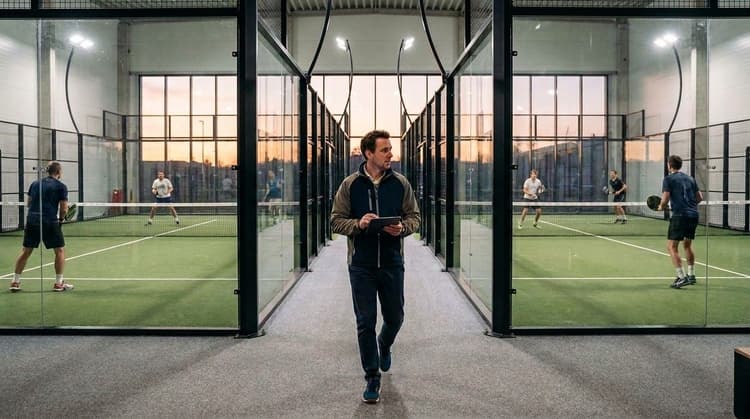
The facility model is changing too. More venues are treating pickleball like a social sports product: climate control, leagues, tournaments, memberships, food and beverage, and evening programming. The old model of painted lines on borrowed courts cannot carry every market forever.
Surface choice is becoming part of the trend. Cushioned acrylic and other specialized court systems are being discussed because player volume raises safety, traction, and maintenance questions. If hundreds of people rotate through a facility each week, the court becomes part of the operating model, not merely the surface under the ball.
The takeaway for clubs is blunt: the court shortage is also a scheduling and programming issue. Good formats squeeze more useful play out of the same facility without turning every session into a crowded free-for-all.
Trend 5: Equipment and performance technology are getting more serious
The paddle aisle is now a serious commercial category. One equipment market forecast in the source file estimates the pickleball equipment market at $480.6 million in 2025, with projected growth through 2035. Another cited forecast projects the category reaching $3.1 billion by 2032.
The broader commercial category is larger. Market.us projects the global pickleball market could grow from $2.2 billion in 2024 to $9.1 billion by 2034. Forecasts vary, but the direction is consistent: pickleball is turning into a larger equipment, facility, coaching, and events business.
Technology is moving into the feedback loop. Smart paddles, tracking systems, cameras, and court displays are all trying to make performance visible. Some of it will be useful. Some of it will be noise in a nicer interface.
The coaching question is whether the data changes behavior. A spin number or swing-speed reading only matters if it helps the player understand what to do next. That is where coaches still beat gadgets. The number needs a lesson plan.
Players who want help sorting equipment from actual development can use a guide to find the right pickleball coach before spending more money on gear.
Trend 6: Health research is catching up to the participation boom
The health case for pickleball used to be mostly anecdotal. Now it has a stronger research base. A 2024 scoping review in the Journal of Physical Activity and Health found pickleball participation associated with well-being and physical activity, while a Frontiers review connected racket-sport participation with mental-health outcomes such as life satisfaction, happiness, and depression.
The cardiovascular data is especially useful. A study on older adult pickleball players found participants averaged more than 68 minutes of MVPA per session and more than 86 minutes in elevated heart-rate zones. That gives the “pickleball is exercise” claim a real number.
For adults who struggle to stick with conventional workouts, the sport’s social structure is part of the point. A session feels like play, but the body still has to move, stop, bend, recover, and repeat. The data behind whether pickleball is good exercise is stronger than it was even a few years ago.
This trend matters for operators too. Health systems, senior centers, employer wellness programs, and active-aging communities all need physical activity that people will repeat. Pickleball has a better case for that than most gym programs because people actually come back.
For older adults, the opportunity comes with a safety caveat. The sport is accessible, but older players still need balance work, rest, and pacing. The practical version of that is covered in the guide to pickleball for seniors.
Trend 7: Global and adaptive growth are moving from side story to structure
USA Pickleball’s Annual Growth Report documents more than 60 countries with active federations and 104,828 members nationwide in 2025. That shows an organizational base expanding beyond North America, even while the U.S. remains the center of gravity.
The international picture is still uneven. North America remains the center of gravity. But Asia, Europe, and emerging federation markets now have enough activity that coaching standards, tournament operations, and software for organizing play become real needs outside the U.S.
The inclusion story is also getting more formal. The 2026 USA Pickleball Official Rulebook includes a dedicated section for wheelchair, adaptive standing, and hybrid doubles play. That matters because rules shape what facilities and tournaments are willing to offer.
Adaptive programming is part of how pickleball can use its smaller court, lighter ball, and doubles-friendly format to serve more players. Coaches and facilities that learn this early will be better prepared as demand grows.
Where this leaves coaches, clubs, and players
Pickleball in 2026 is a maturing sport. The easy growth is still useful, but it will not solve the next set of problems by itself. More players create more pressure on courts, skill matching, coaching quality, event operations, and local community design.
For coaches, the opportunity is clearer than ever: beginner demand, equipment confusion, skill progression, and organized play all point back to instruction. Anyone building a coaching business should understand certification, lesson structure, and local visibility. The process starts with how to become a pickleball instructor.
For clubs, the next advantage is programming. Crowded markets need more than courts. Players want reliable groups, clear formats, fair levels, and sessions that start on time.
For players, the trend is simpler. You have more options than ever, and that can make the sport harder to navigate. The best next step is usually local: find a coach, find a format, and build a routine you can repeat.
For players who want coaching, leagues, and organized play in one place, Bounce connects you with certified coaches and local racket-sport programming built around how people actually play now.
Conclusion
The trends reshaping pickleball in 2026 all point in the same direction. The sport has the players. Now it needs the systems.
Participation is large enough to strain courts. The player base is young enough to change programming. Institutional money is large enough to professionalize more of the ecosystem. Health research is strong enough to move the sport into wellness conversations. Global and adaptive play are organized enough to matter.
The operators who win from here will not be the ones waiting for growth to carry them. They will build better formats, better coaching pathways, better facilities, and better reasons for players to come back next week.
For players, coaches, and clubs trying to act on that shift, Bounce helps connect local racket-sport communities through coaching, organized play, leagues, and programming.
Frequently asked questions
How many people play pickleball in the U.S. in 2026?
The best current figure is 24.3 million U.S. players in 2025, according to SFIA. That is the latest completed annual participation count, so any 2026 figure should be treated as a projection until the next full report is published.
Is pickleball still growing in 2026?
Yes. SFIA reported 171.8% growth from 2022 to 2025 and 24.3 million U.S. players in 2025. The rate is maturing from the earlier spike, which is what happens when a sport moves from breakout attention into repeat participation.
Who invested in pickleball in 2026?
Apollo Sports Capital led a $225 million structured investment in Pickleball Inc., the parent company of the PPA Tour and Major League Pickleball. Bluestone Equity Partners also invested $30 million in Selkirk Sport, showing capital moving into both the pro game and the equipment category.
What is the pickleball market worth?
One market forecast cited in the source file values the global pickleball market at $2.2 billion in 2024 and projects $9.1 billion by 2034. Equipment-specific forecasts vary, with one estimate putting the equipment market at $480.6 million in 2025 and another projecting $3.1 billion by 2032.
Is pickleball good for your health?
Research supports pickleball as a meaningful source of physical activity. One study found older adult players averaged more than 68 minutes of moderate-to-vigorous physical activity per session and more than 86 minutes in elevated heart-rate zones.
Is pickleball an Olympic sport?
No. Pickleball is not currently an Olympic sport. The stronger case for future inclusion depends on wider international participation, federation growth, consistent governance, and credible competition structures outside North America.