A golden pickle sounds like a joke until you're standing at 0-9 and someone on the sideline starts counting serves.
In pickleball, the term describes a shutout that goes deeper than 11-0. The losing side never even gets a turn to serve.
Want a quick answer? A golden pickle is when one team wins a pickleball game 11-0 and the losing team never serves. It is the strictest version of getting pickled, because the winning side holds serve from the first rally to game point. The term belongs to pickleball slang. Formal score sheets still show an 11-0 game.
Pickleball has always had a weird vocabulary. The sport has kitchens, dinks, Ernies, ATPs, and enough food references to make a new player wonder if they joined a brunch league by accident.
The golden pickle sits inside that same pickleball terms ecosystem, but the scoring sequence behind it is specific enough to earn a closer look.
What a golden pickle means in pickleball
A golden pickle is an 11-0 win where the losing team never serves. Not once.
That final condition is the entire point. A team can lose 11-0 after serving several times. That is a regular pickle. A golden pickle means the first serving side ran the table before the other side touched the ball as a server.
The phrase describes the way the game happened, not just the final score. Two games can both end 11-0 and feel completely different.
In a regular pickle, the losing team might have had chances to score. Maybe they served at 0-3, 0-6, and 0-9, then missed returns, dumped thirds, or overhit speedups. The score still says 11-0.
In a golden pickle, the losing team never gets that chance. They receive every point, lose every rally while the other side serves, and walk off with a zero that came with no service turn.
The USA Pickleball official rulebook defines the formal rules of play. Golden pickle lives in the player vocabulary around those rules, the same way players talk about getting pickled, bageled, or skunked.
Side-out scoring is the reason golden pickles exist
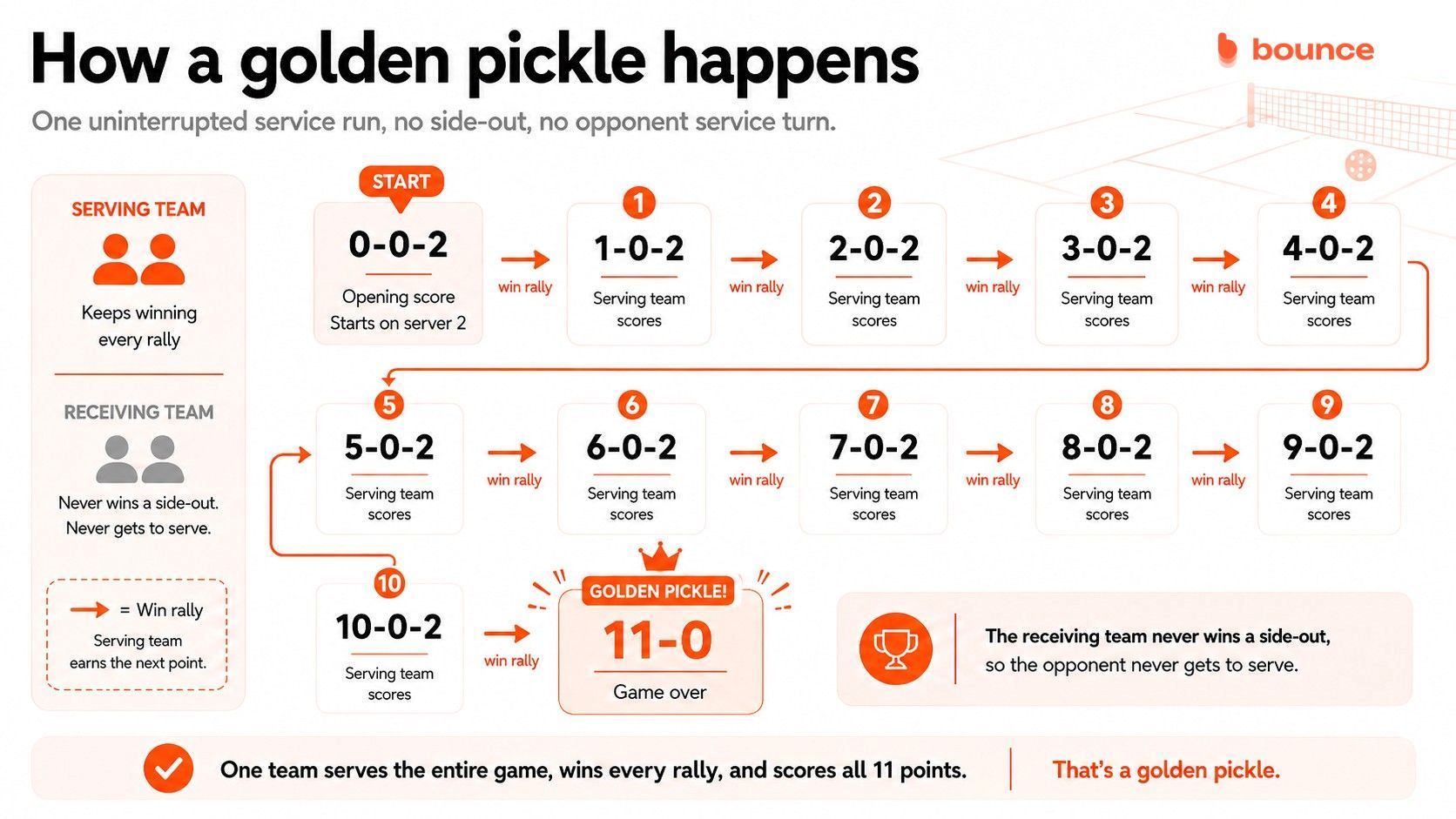
A golden pickle only makes sense under side-out scoring.
Under traditional side-out scoring, only the serving team scores a point. The receiving team can win a rally, but that rally gives them the serve. It does not give them a point.
That scoring structure creates the strange possibility behind the 11-0 shutout. A regular pickle can still happen after the losing side wins a few receiving rallies. A golden pickle goes further: the receiving side never wins a side-out.
Start position matters. The golden side has to open the game on serve. When the other side opens the game on serve, that service turn already breaks the golden condition, even if you win the next 11 points.
Doubles makes the sequence even cleaner. The first server begins at 0-0-2. If that server keeps winning points, their partner never serves, the opponent never serves, and the game ends 11-0 from one uninterrupted service run.
That is why the term gets a reaction. It means one server, one run, zero side-outs, zero service chances for the other side.
Golden pickle versus getting pickled
Getting pickled is the broader term. Golden pickle is the more exact one.
Most players use "pickled" for any 11-0 loss. The losing side scored zero. They might have served, had a few long rallies, made it competitive for a stretch. The score still landed on the wrong side of ugly.
Golden pickle adds the service condition. The losing side never held serve, never called a score, never had a chance to put a point on the board.
| Term | Typical score | What it means |
| Pickled | 11-0 | The losing side scored zero. They may have served during the game. |
| Golden pickle | 11-0 | The losing side scored zero and never served. |
| Dill pickle | 11-1 | Regional slang for scoring exactly 1 point in a heavy loss. |
| Bagel | 11-0 | Tennis crossover slang for a zero on the scoreboard. |
| Skunk | Shutout or lopsided score | Regional slang for getting blanked or badly beaten. |
You'll see overlap because slang spreads unevenly across courts and regions. The USA Pickleball official rulebook covers formal scoring definitions, but player vocabulary has always run ahead of the official terminology.
That is part of the charm. Pickleball has a formal rulebook and a very informal court culture, which is why the sport can have serious rules, odd naming history, and a shutout named after a pickle jar.
The scoring math behind a golden pickle
The math is simple and brutal.
For a golden pickle to happen in a standard game to 11, the opening server has to win 11 scoring rallies before giving up a side-out. The receiving team can extend points, defend well for stretches, and still end the game with no serve if every key rally goes the other direction.
In doubles, the first server starts at 0-0-2. That starting call matters because the opening team gets only one server before a side-out. If that first server faults, the opponent gets the ball and the golden pickle is gone.
So a doubles golden pickle usually means one of two things. The server built pressure from the first ball and kept forcing weak returns. Or the receiving team gave away enough errors that the server never had to survive much pressure.
Both versions happen. The cleanest golden pickles look boring on the winning side: deep serves, safe thirds, controlled volleys, and no panic when the other team finally makes a ball.
How rare is a golden pickle?
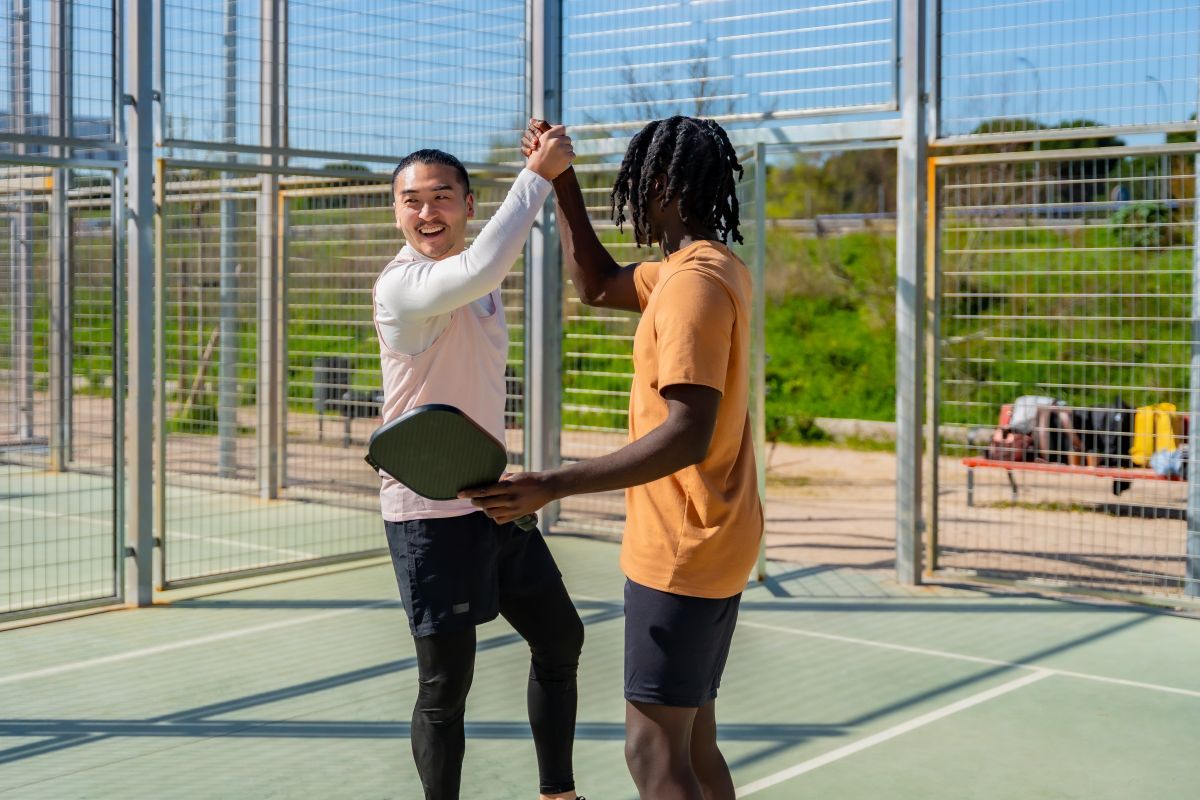
There is no verified public dataset that tracks golden pickle frequency by skill level. Any exact percentage you see online should make you suspicious unless it names a real source and method.
The logic is still clear. Golden pickles happen more in beginner and mixed-level recreation because serve returns break down fast. A new player can miss 4 returns in a row, and suddenly the score has moved from 0-0-2 to 4-0-2 before anyone has settled.
At 3.0 to 3.5, they become much harder. Players at that level can usually get one deep return in, force a side-out, and at least call a serving score once.
At 4.0 and above, a golden pickle is genuinely rare. Strong players do not give away 11 straight service rallies without creating one loose ball, one missed third, or one transition error.
Mixed-level drop-in play is where you are most likely to hear the phrase. Bounce open play helps players find local games across pickleball, tennis, and padel, and those sessions naturally include a wider range of styles and experience levels than a rated league.
Singles golden pickles are more common than doubles ones. One player has to cover every ball, manage every return, and solve every pattern alone. If their return is shaky that day, the score can collapse fast.
The psychology of 0-6
The hardest part of a golden pickle is usually the middle of the game.
At 0-2, most players still feel fine. At 0-5, they start pressing. At 0-8, the sideline knows what is happening, and every return feels heavier than it should.
That pressure changes shot selection. Players swing bigger on returns, aim closer to lines, and speed up balls that should stay neutral. One rushed choice feeds the next rushed choice.
Good teams do the opposite when they are protecting the run. They keep the ball deep, keep the first volley simple, and make the other side play one more ball. A golden pickle usually needs pressure, but it also needs patience.
What it takes to pull one off
Golden pickles usually come from clean first-ball patterns.
- The serve lands deep enough to keep the returner uncomfortable.
- The serving team avoids cheap errors after the return comes back.
- The first volley stays controlled instead of turning into a low-percentage swing.
- The receiving team never earns a side-out when the score starts tightening.
The last part is the hardest. Plenty of teams can run a lead to 5-0. Holding the run from 5-0 to 11-0 takes cleaner decision-making because the other side will start fighting to avoid the story.
Serve reliability and return depth are coachable. Bounce lessons connect players with coaches by location and sport, which helps when the same errors keep showing up in the first 4 shots of every rally.
Players who want the deeper mechanics can also study pickleball serving rules and pickleball strategy, because golden pickles usually come from ordinary shots repeated well.
How to avoid getting golden pickled
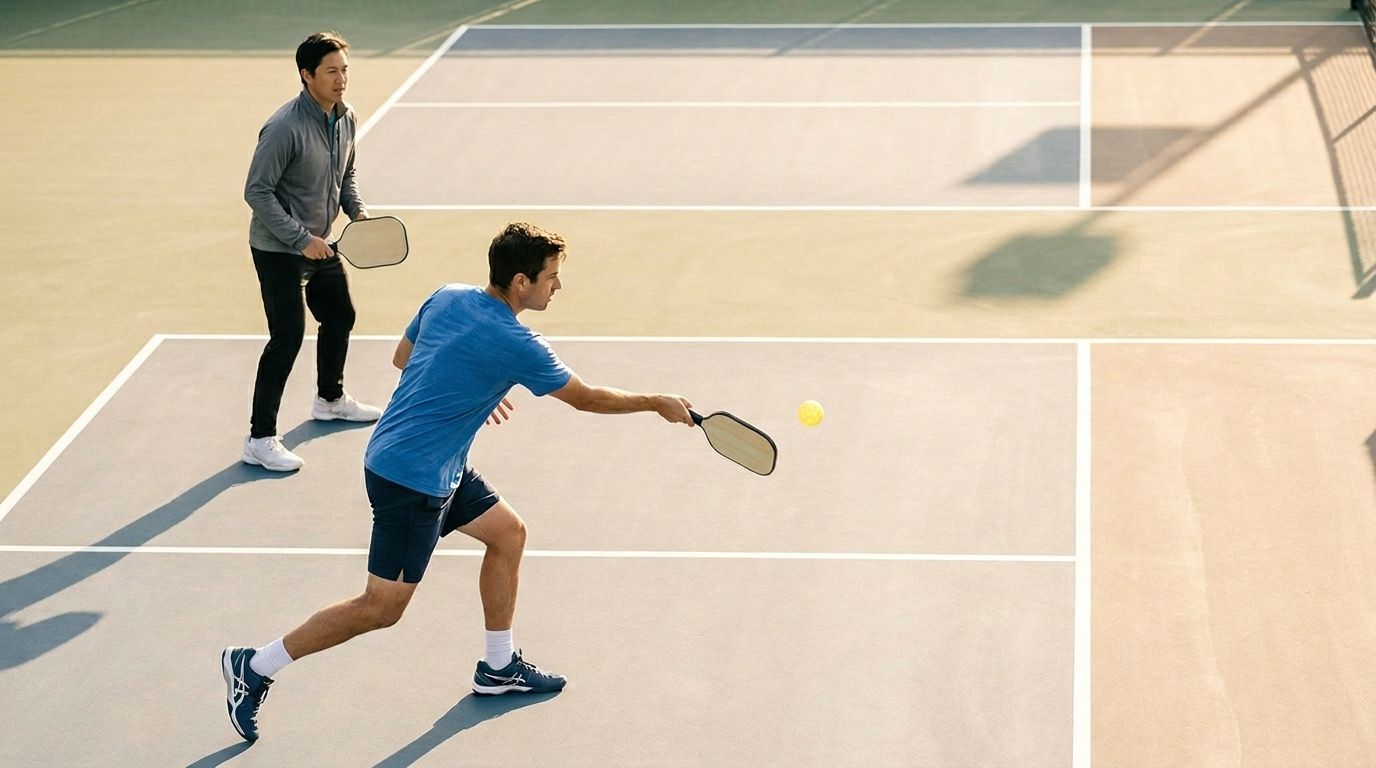
The goal at 0-4 is simple: earn one service turn. Do that first. Worry about the comeback after you have touched the ball as the server.
- Make the return deep, even if it is slow. Depth buys time.
- Aim middle until your hands settle. Middle balls cut off cheap misses.
- Say the score out loud. It slows the panic loop.
- Choose one safe serve target when you finally get the ball.
A team that is getting squeezed usually loses because the first ball is too loose. The return floats short, the third shot gets attacked, or the next ball gets rushed into the net.
Break the run with boring pickleball. Deep return. High margin target. One more ball. That is usually enough to kill the golden part, even if the game still gets ugly.
Conclusion
The golden pickle survives because players love naming misery with precision. An 11-0 loss already stings. An 11-0 loss without a serve attempt becomes a story.
The key distinction is simple: getting pickled means losing 11-0. A golden pickle means losing 11-0 without ever serving. Same scoreboard. Different level of control.
For players building their game through structured coaching and organized play, Bounce connects you with certified coaches, open play, and competitive formats in your city.